Most are not serious, but they deserve attention
According to the British health service NHS, most headaches are not a sign of something serious and improve with rest, water and an ordinary painkiller. When it becomes routine, though, it is worth investigating what is causing it.
Source: NHS, headaches.
Common causes that go unnoticed
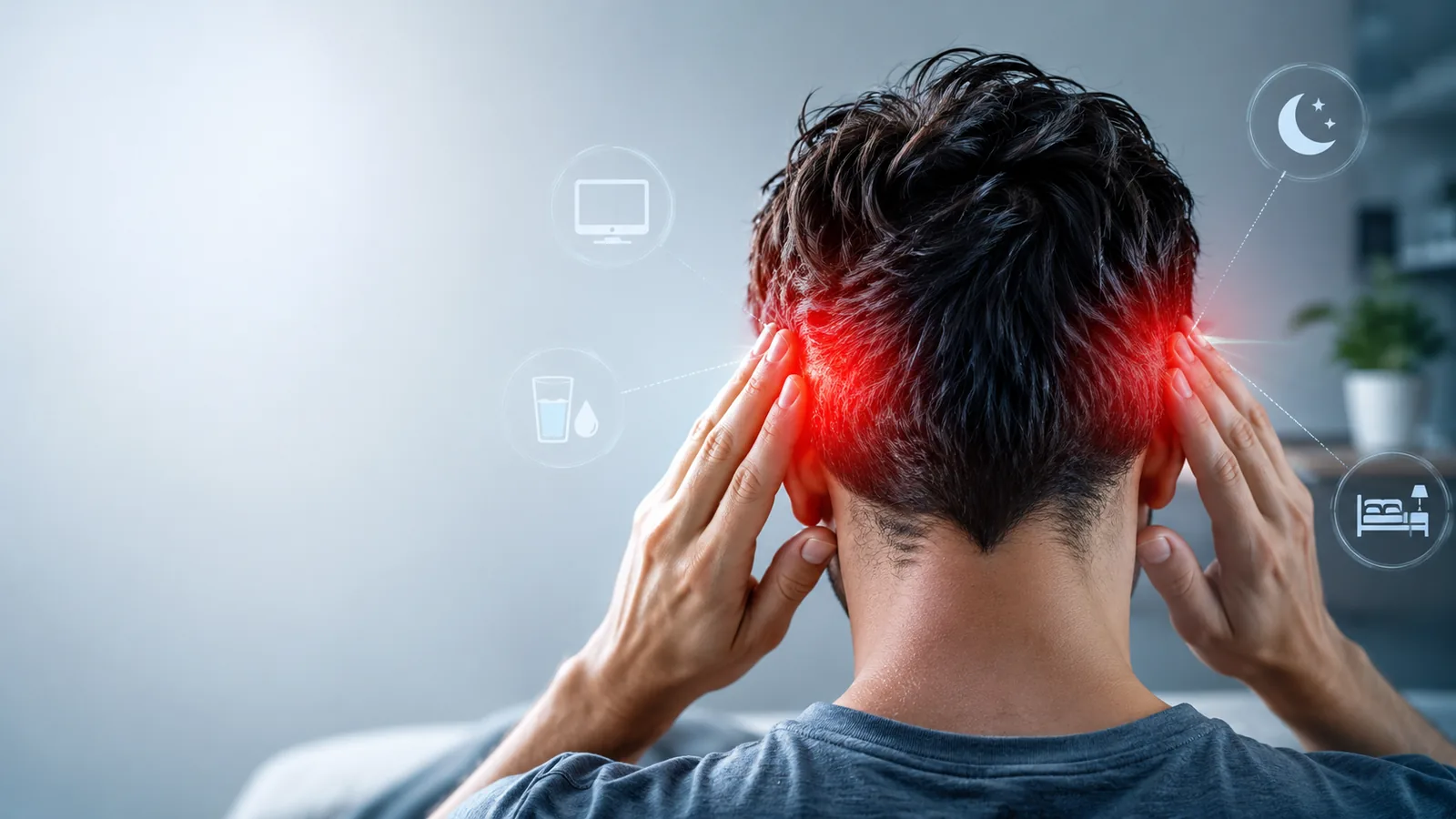
- Irregular sleep: sleeping little or at very varied times.
- Little water: dehydration is among the causes cited by the NHS.
- Tension and posture: hours at the computer with shoulders and neck tensed.
- Caffeine: both too much and too little, in people used to it.
- Skipped meals and alcohol.
- Too many painkillers: the NHS warns that using headache medication very often can itself cause headaches.
How to find the pattern
A simple diary helps: write down the day, time, intensity, what you ate, how you slept and what you took. In two or three weeks, a link to sleep, screens, caffeine or the menstrual cycle usually shows up.
Also see signs of dehydration, posture when working from home and too much caffeine.
When the medicine itself keeps the pain going
It sounds contradictory, but using painkillers too often can make headaches show up more. The World Health Organization calls this condition medication-overuse headache and notes that it is the most common secondary headache, affecting up to 5% of some populations, more women than men.
According to the WHO, this pain appears on most days, is persistent and is usually worse on waking. Anyone who takes headache medication many times a week should talk to a doctor before simply stopping, because treatment involves adjusting use with follow-up.
Source: World Health Organization, headache disorders.
The missing coffee hurts too
Caffeine is another trigger that goes unnoticed, and not only through excess. A review published in Psychopharmacology analyzed dozens of studies on caffeine withdrawal and concluded that headache is the most common symptom when someone used to coffee goes without it.
According to the authors, symptoms usually start 12 to 24 hours after the last dose, peak between one and two days and can last 2 to 9 days. This explains the weekend headache in people who drink coffee early on weekdays and wake up later on Saturday. To cut back, the more comfortable path is to reduce gradually rather than all at once.
Source: Juliano and Griffiths, review on caffeine withdrawal, Psychopharmacology, 2004.
When to seek help
See a doctor if the headaches are frequent, get worse over time or do not improve with an ordinary painkiller. Seek urgent care if the pain is sudden and very strong, comes after a blow to the head, or comes with fever and a stiff neck, confusion, weakness on one side of the body, slurred speech or loss of vision.
Sources
- NHS. Headaches. https://www.nhs.uk/conditions/headaches/
- World Health Organization. Headache disorders, fact sheet. https://www.who.int/news-room/fact-sheets/detail/headache-disorders
- Juliano LM, Griffiths RR. A critical review of caffeine withdrawal: empirical validation of symptoms and signs, incidence, severity, and associated features. Psychopharmacology, 2004. https://doi.org/10.1007/s00213-004-2000-x
Frequently asked questions
Is taking a painkiller every day bad for you?
It can cause so-called medication-overuse headache, according to the NHS. Anyone who needs medication often should see a doctor.
Does the phone screen cause headaches?
Prolonged use, with bad posture and few breaks, can contribute. Breaks and brightness adjustment help.
When is a headache an emergency?
Sudden, very strong pain, after a blow, or with fever and a stiff neck, confusion or weakness calls for immediate care.
Does going without coffee cause a headache?
It can. Headache is the most common symptom of caffeine withdrawal and usually starts 12 to 24 hours after the last dose. Cutting back gradually reduces the discomfort.