A reflex that spreads
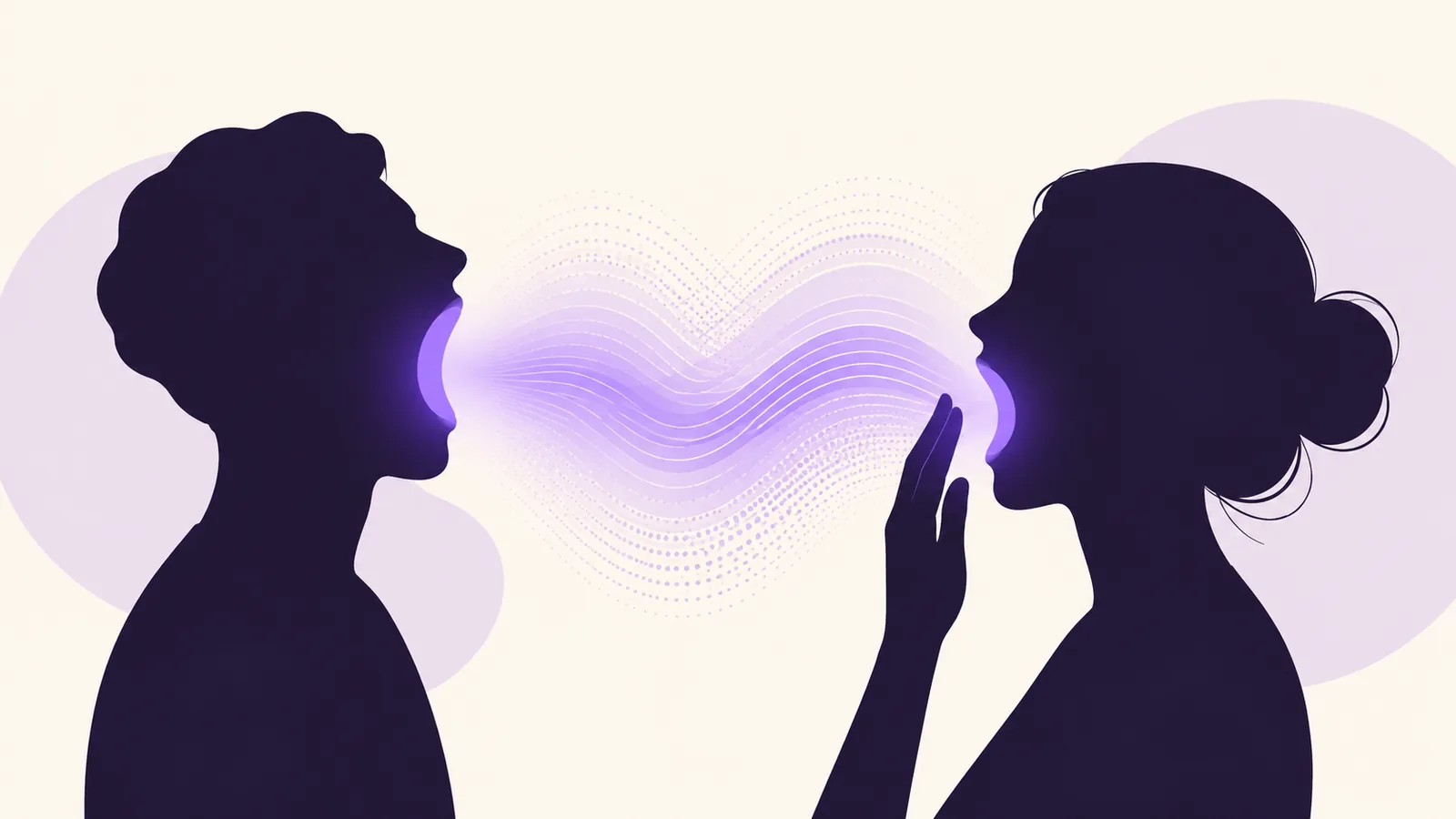
Someone yawns across the table in a long meeting, and a few seconds later you are yawning too. It can happen just from hearing a yawn or reading about one. You may have yawned reading this sentence. Contagious yawning is different from a sleepy yawn: other people trigger it.
Read also: Why dogs seem to understand our emotions and Why we want to squeeze cute things.
What a study of adults found
Ivan Norscia and Elisabetta Palagi observed yawns in everyday situations and published the results in PLoS ONE. Contagion was most frequent and fastest among family members, then friends, then acquaintances, and lowest among strangers. For the authors, the pattern follows emotional closeness, which supports a link between contagious yawning and empathy.
Source: Norscia and Palagi, Yawn Contagion and Empathy in Homo sapiens, PLoS ONE, 2011.
So what is yawning for?
The idea that we yawn from lack of oxygen is old and not well supported. A newer hypothesis is that yawning helps cool the brain. Andrew Gallup and Gordon Gallup showed yawning videos to volunteers: those breathing only through the nose or holding a cold pack to the forehead yawned less in response than those with a warm or room-temperature pack. It is a hypothesis with some evidence, not a settled answer.
Source: Gallup and Gallup, Yawning as a Brain Cooling Mechanism, Evolutionary Psychology, 2007.
When contagion starts
Babies yawn even before birth, but contagious yawning shows up later. A study in Child Development found it is rare in very young children and becomes more common around age 4, when kids get better at understanding what others feel. It has also been recorded in chimpanzees watching videos of other chimps yawning.
Source: Helt et al., Child Development, 2010; Anderson et al., Proceedings of the Royal Society B, 2004.
Not yawning back does not mean you lack empathy
Contagion varies a lot between people and situations, depending on attention, tiredness and even time of day. And dogs have been seen yawning after their owners. See why dogs seem to understand our emotions.
Sources
- Norscia I, Palagi E. Yawn Contagion and Empathy in Homo sapiens. PLoS ONE, 2011. https://doi.org/10.1371/journal.pone.0028472
- Gallup AC, Gallup GG. Yawning as a Brain Cooling Mechanism. Evolutionary Psychology, 2007. https://doi.org/10.1177/147470490700500109
- Helt MS et al. Contagious Yawning in Autistic and Typical Development. Child Development, 2010. https://doi.org/10.1111/j.1467-8624.2010.01495.x
- Anderson JR, Myowa-Yamakoshi M, Matsuzawa T. Contagious yawning in chimpanzees. Proceedings of the Royal Society B, 2004. https://doi.org/10.1098/rsbl.2004.0224
Frequently asked questions
Why is yawning contagious?
One leading explanation links it to empathy and social bonds: contagion is stronger between people who are close.
Do we yawn because we need oxygen?
That idea is not well supported. One hypothesis is that yawning helps cool the brain.
At what age does contagious yawning start?
It becomes more common around age 4, according to a study in Child Development.
Do animals catch yawns?
Yes. It has been seen in chimpanzees, and dogs have been observed yawning after their owners.