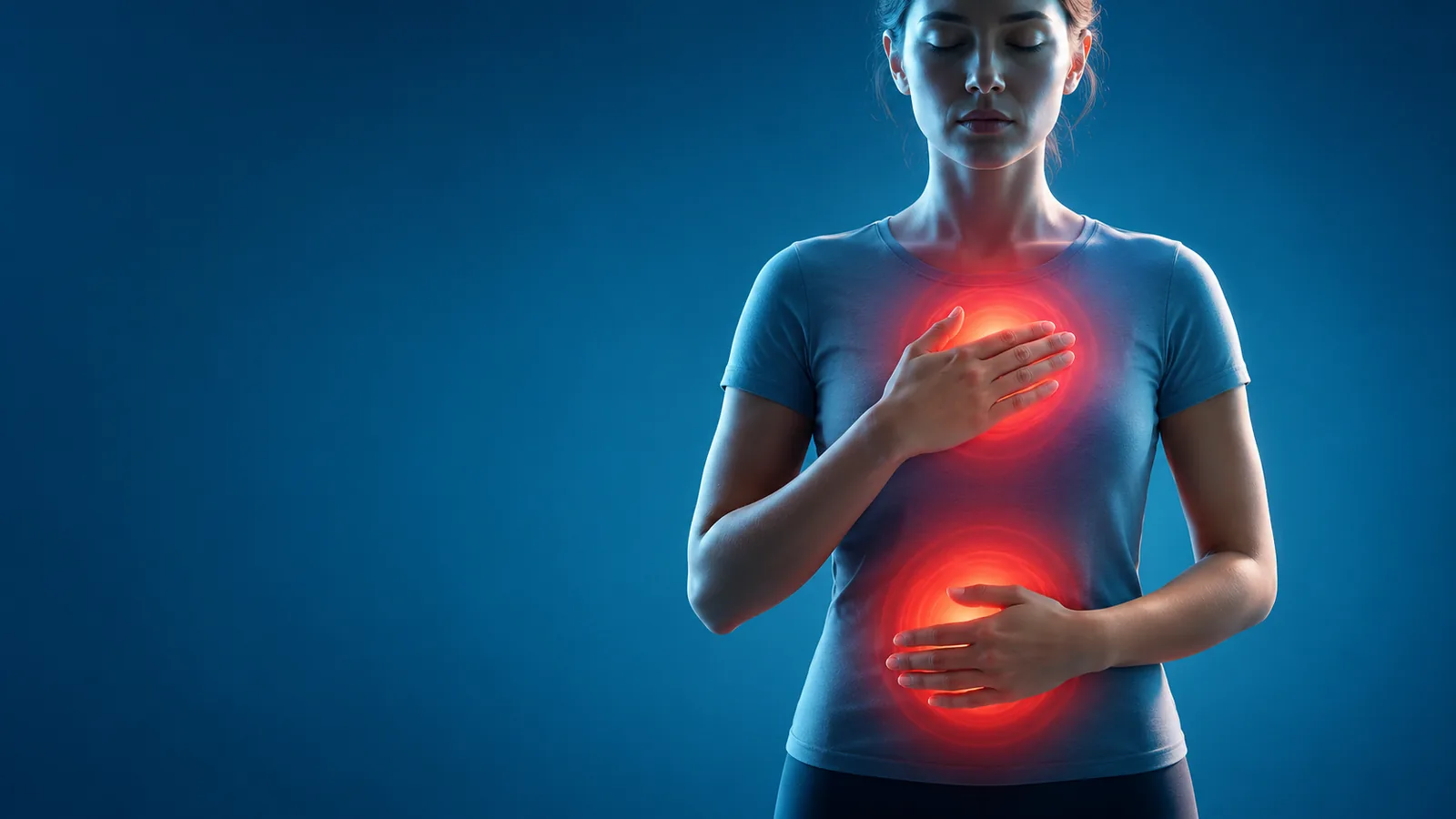
Anxiety also shows up in the body
Feeling anxious before an exam or a difficult conversation is normal. The warning sign is when it shows up often, for no clear reason, and starts to get in the way of work, sleep or relationships. The body often gives notice before the person puts a name to what they feel.
The most common physical signs
NIMH, the US mental health institute, lists among the symptoms of generalized anxiety disorder: restlessness or a feeling of being "on edge", getting tired easily, trouble concentrating, irritability, muscle tension and sleep problems. In panic attacks, there is a racing heart, sweating, trembling and a sense of shortness of breath.
Source: NIMH, anxiety disorders.
- Clenched jaw or pain in the neck and shoulders.
- "Knotted" stomach in tense situations.
- Waking up tired even after sleeping.
What helps day to day
A few simple measures help lower tension: slow breathing for a few minutes, regular physical activity, steady sleep schedules and less caffeine. They do not replace treatment when it is needed, but they make a difference.
Also see habits for sleeping better and too much caffeine.
Anxiety is common and treatable
Feeling anxious from time to time is part of life. What changes in an anxiety disorder is the intensity: fear and worry become excessive, hard to control and begin to get in the way of work, studies and relationships. According to the World Health Organization, anxiety disorders are the most common mental health problems in the world and affected about 470 million people in 2023, more women than men.
The same organization highlights two points that help ease the fear of seeking help: very effective treatments exist, and only about 1 in 4 people with the problem receives them. Recognizing the signs in the body early is exactly what shortens that path.
Source: World Health Organization, anxiety disorders.
Movement and breathing as allies
Physical activity does not replace treatment, but it adds to it. A meta-analysis published in Psychiatry Research brought together trials with people diagnosed with anxiety and stress-related disorders and found a greater reduction in symptoms in the groups that exercised than in the control groups.
Breathing also helps because it is one of the few parts of the alert reaction you can control. In diaphragmatic breathing, air comes in through the nose, the belly expands and the exhale goes out slowly. In a study with healthy adults, eight weeks of this practice reduced negative emotions and levels of cortisol, the stress hormone.
Source: Stubbs and colleagues, meta-analysis on exercise and anxiety, Psychiatry Research, 2017.
When to seek help
If symptoms show up on most days, last for weeks or disrupt your routine, it is worth seeing a doctor or psychologist. Anxiety has treatment. In Brazil's public system, the entry point is the Basic Health Unit (UBS).
Chest pain, severe shortness of breath or fainting call for urgent care, because other conditions cause similar symptoms. If you are in emotional distress, CVV offers free support by phone at 188 in Brazil and on the CVV website. Elsewhere, look for your local crisis line.
Sources
- NIMH. Anxiety Disorders. https://www.nimh.nih.gov/health/topics/anxiety-disorders
- CVV, Centro de Valorização da Vida (Brazil). https://cvv.org.br/
- World Health Organization. Anxiety disorders, fact sheet. https://www.who.int/news-room/fact-sheets/detail/anxiety-disorders
- Stubbs B et al. An examination of the anxiolytic effects of exercise for people with anxiety and stress-related disorders: A meta-analysis. Psychiatry Research, 2017. https://doi.org/10.1016/j.psychres.2016.12.020
- Ma X et al. The Effect of Diaphragmatic Breathing on Attention, Negative Affect and Stress in Healthy Adults. Frontiers in Psychology, 2017. https://doi.org/10.3389/fpsyg.2017.00874
Frequently asked questions
Can anxiety cause physical symptoms?
Yes. Muscle tension, tiredness, sleep problems and a racing heart are among the symptoms cited by NIMH.
How can I tell an anxiety attack from a heart problem?
You cannot tell them apart safely on your own. Chest pain or strong shortness of breath call for urgent evaluation.
Where can I find free help?
At the Basic Health Unit in your area. For immediate emotional support in Brazil, CVV answers at 188.
Does exercise help control anxiety?
It can help as a complement. A meta-analysis with diagnosed people showed a greater reduction in symptoms in those who exercised, but this does not replace follow-up with a health professional.