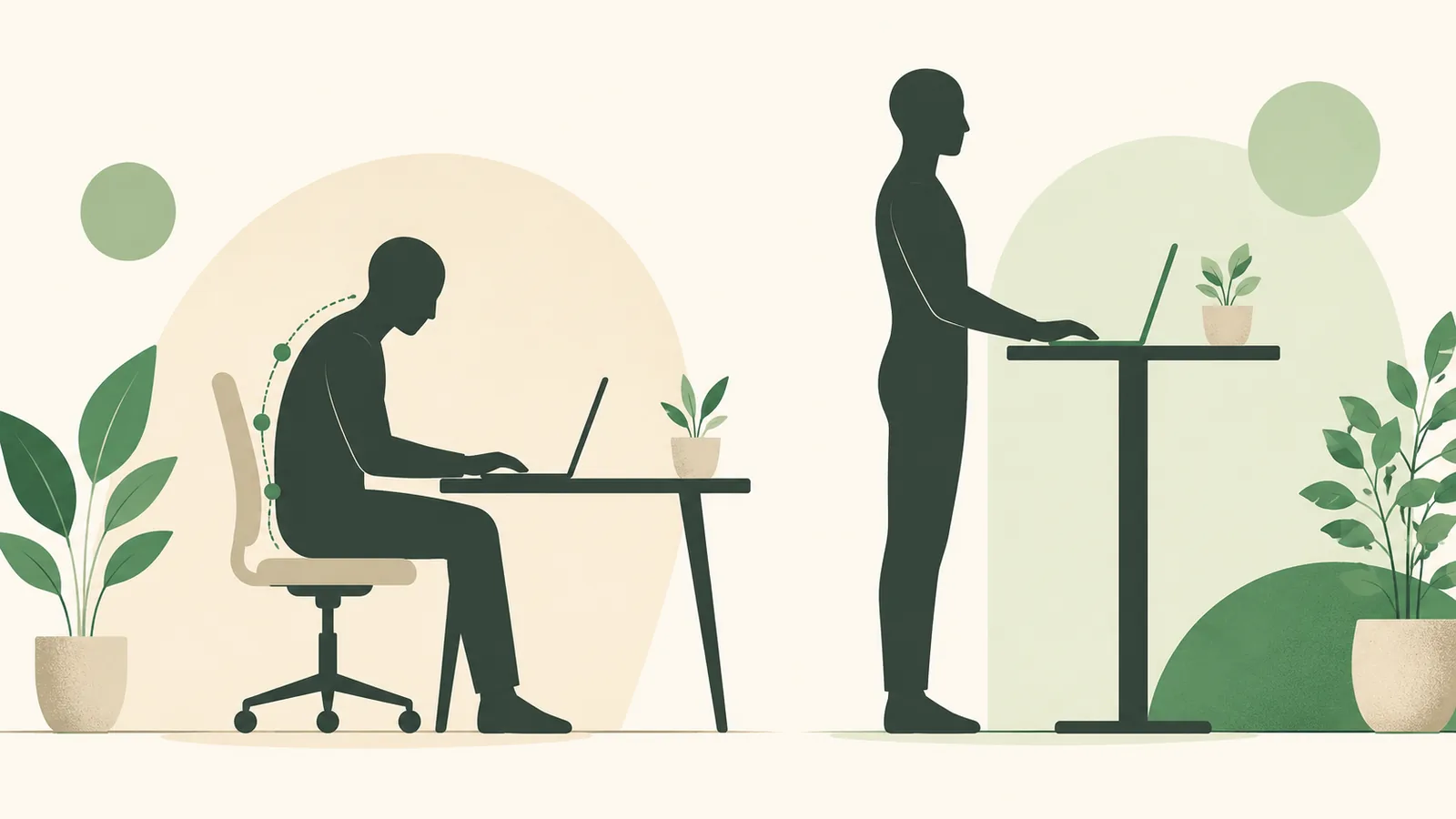
Exercise and sitting time are different things
A person can work out an hour a day and spend the other ten sitting at work, in the car and on the couch. Research has come to treat these two things separately: being active and being sedentary are not perfect opposites.
What the WHO recommends
The World Health Organization's 2020 physical activity guideline recommends, for adults, 150 to 300 minutes a week of moderate activity, or 75 to 150 minutes of vigorous activity. The same guideline recommends limiting sedentary time and replacing it with activity of any intensity, even light. To reduce the effects of many hours seated, the WHO advises doing more activity than the recommended minimum.
Source: World Health Organization, guidelines on physical activity and sedentary behaviour, 2020.
How to break up the sitting hours
- Get up every 30 to 60 minutes to drink water, stretch or walk a bit.
- Take calls standing or walking.
- Use stairs when you can and get off the bus one stop early.
- At home, alternate screen time with tasks that involve movement.
Light movement counts, according to the WHO. You do not have to turn your whole day into a workout.
Posture helps, but does not solve it alone
A well-adjusted chair reduces discomfort but does not replace breaks. See posture when working from home and neck pain from phone use.
How much exercise makes up for the sitting day
An analysis published in The Lancet brought together data from more than 1 million adults followed for years. Among those who sat for many hours and moved little, the risk of dying during the period was higher. But among the most active, who did about 60 to 75 minutes a day of moderate activity, such as brisk walking, sitting time stopped raising that risk.
One important detail: even in that group, many hours of watching television still appeared linked to higher risk. For those who do not reach an hour of activity a day, which is most people, breaking up sitting time remains the more realistic path.
Source: Ekelund and colleagues, physical activity, sitting time and mortality, The Lancet, 2016.
Two minutes that change glucose
An experiment published in Diabetes Care tested the effect of short breaks. Overweight adults spent an afternoon seated after a sugary drink, in three situations: sitting the whole time, getting up every 20 minutes to walk lightly for 2 minutes, or getting up to walk for 2 minutes at a moderate pace.
With the breaks, glucose and insulin after the meal rose less than on the day of nonstop sitting, in both light and moderate walking. It is a small, laboratory study, but it shows that simple interruptions already affect metabolism.
Source: Dunstan and colleagues, Breaking up prolonged sitting, Diabetes Care, 2012.
When to seek help
Anyone with heart disease, high blood pressure, diabetes or who is returning to exercise after a long time should talk to a doctor before raising the intensity. Chest pain, disproportionate shortness of breath or dizziness during effort call for evaluation.
Sources
- World Health Organization. WHO guidelines on physical activity and sedentary behaviour, 2020. https://www.who.int/publications/i/item/9789240015128
- Ekelund U et al. Does physical activity attenuate, or even eliminate, the detrimental association of sitting time with mortality? The Lancet, 2016. https://doi.org/10.1016/S0140-6736(16)30370-1
- Dunstan DW et al. Breaking Up Prolonged Sitting Reduces Postprandial Glucose and Insulin Responses. Diabetes Care, 2012. https://doi.org/10.2337/dc11-1931
Frequently asked questions
Can someone who works out every day sit the rest of the time?
The WHO recommends limiting sedentary time even for people who exercise, replacing part of it with light movement.
How much exercise a week does the WHO recommend?
150 to 300 minutes of moderate activity, or 75 to 150 minutes of vigorous activity, for adults.
Does walking around the house count?
Yes. The guideline considers activity of any intensity better than staying still.
Does getting up now and then really make a difference?
Yes. In one experiment, walking 2 minutes every 20 minutes of sitting reduced the rise in glucose and insulin after a meal.