Why blue keeps winning
Ask a room full of people for their favorite color and blue will almost certainly come out on top. Surveys in many countries point the same way, while certain browns and olive greens tend to land at the bottom. The question is why.
Read also: The Mandela Effect: why so many people remember it wrong and Why do we yawn when we see someone else yawn?.
The association theory
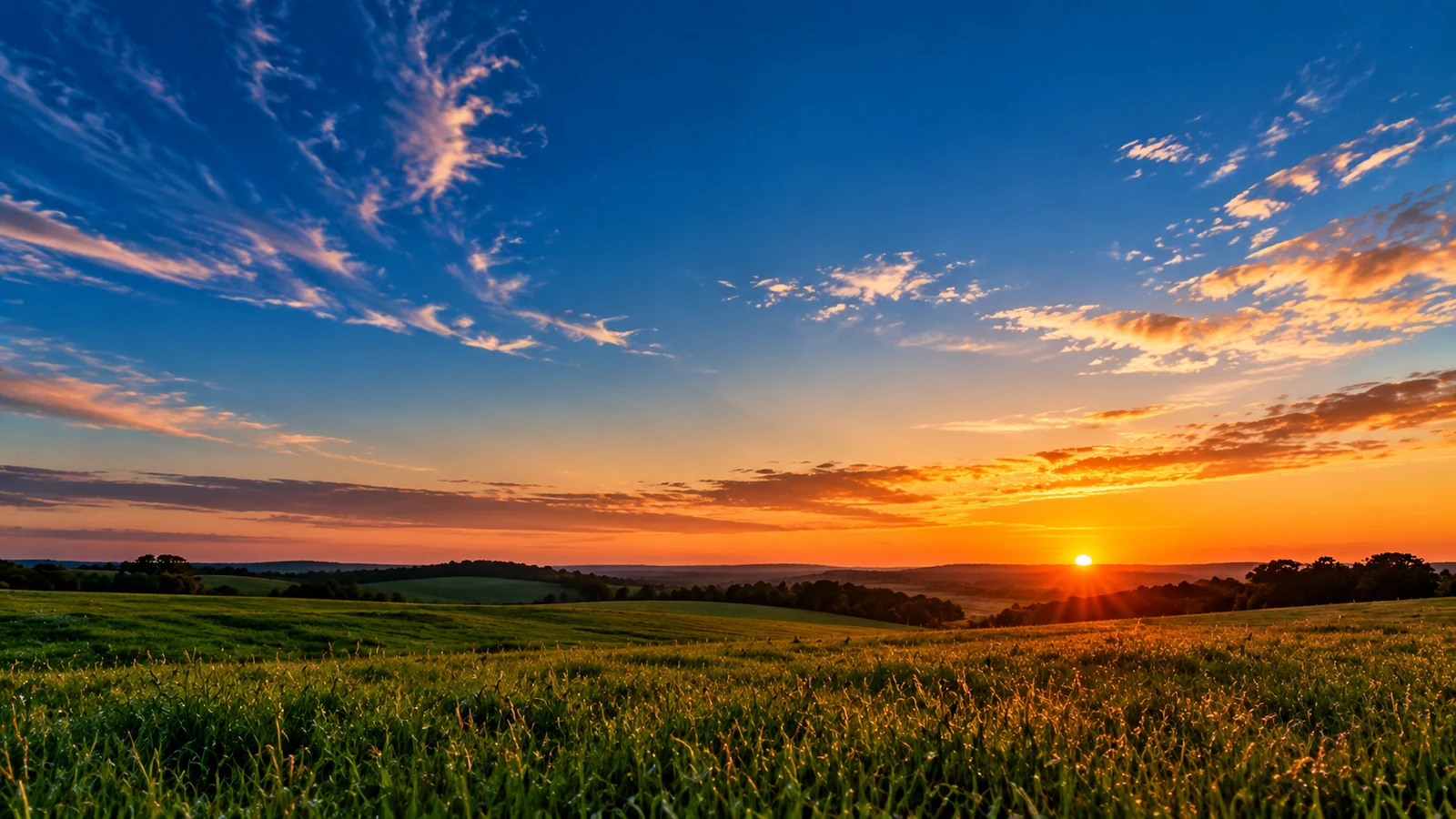
Stephen Palmer and Karen Schloss, at the University of California, Berkeley, proposed what they call the ecological valence theory: we like a color to the extent that we like the things we associate with it. Blue brings to mind clear skies and clean water. Some browns and greens bring to mind spoiled food or mud. In their tests, the average of those associations predicted people's color preferences remarkably well.
Source: Palmer and Schloss, An ecological valence theory of human color preference, PNAS, 2010.
The college rivalry test
If associations drive preference, then strong emotional ties to something should shift how much we like its colors. The same team tested that with a classic rivalry: Berkeley versus Stanford.
Berkeley students liked blue and gold more than Stanford students did, and Stanford students showed more liking for red and white. The more school spirit a student reported, the stronger the effect. Anyone who has bought a jersey for their team will recognize the pattern.
Do men and women choose differently?
Researchers at Newcastle University asked more than 200 young adults, British and Chinese, to quickly pick between pairs of colors on a screen. In both groups and both sexes, bluish shades were the favorites.
The difference was in the details: women leaned more toward the reddish and purplish side of the spectrum. The authors floated evolutionary explanations, but the study cannot separate biology from culture, and that debate remains open.
Color and emotion around the world
Your favorite color says little about your personality, but the link between colors and feelings looks sturdier. A study with more than 4,500 participants from 30 countries asked people to match colors to emotions. There was a lot of overlap across cultures: red was tied to both love and anger, and black to sadness, for example.
Countries with related languages or close geography had more similar associations. So there is a shared base, but language and culture fine-tune what each color means.
Source: Jonauskaite et al., Universal patterns in color-emotion associations, Psychological Science, 2020.
So what about personality quizzes?
Online quizzes that claim to read your personality from your favorite color are entertainment, not science. What the research supports is simpler: preference follows experience, which is why brands choose colors carefully and why your favorite can change over the years. For another quirk of the mind, read why great music gives you chills.
Sources
- Palmer SE, Schloss KB. An ecological valence theory of human color preference. PNAS, 2010. https://doi.org/10.1073/pnas.0906172107
- Schloss KB, Poggesi RM, Palmer SE. Effects of university affiliation and "school spirit" on color preferences: Berkeley versus Stanford. Psychonomic Bulletin and Review, 2011. https://doi.org/10.3758/s13423-011-0073-1
- Hurlbert AC, Ling Y. Biological components of sex differences in color preference. Current Biology, 2007. https://doi.org/10.1016/j.cub.2007.06.022
- Jonauskaite D et al. Universal Patterns in Color-Emotion Associations Are Further Shaped by Linguistic and Geographic Proximity. Psychological Science, 2020. https://doi.org/10.1177/0956797620948810
Frequently asked questions
Does your favorite color reveal your personality?
There is no solid evidence for that. Research ties color preference to the things we associate with each color.
Why do so many people prefer blue?
According to Palmer and Schloss, because blue is linked to things most people like, such as clear skies and clean water.
Can your favorite color change?
Yes. As your experiences and associations change, your preference can change too, as the Berkeley versus Stanford study suggests.
Do colors mean the same thing in every culture?
Partly. A study across 30 countries found shared patterns, like red with love and anger, but language and geography also shape those links.