The 6 p.m. question
"What's for dinner?" always arrives at the worst time: hungry, tired and short on time. That is when DoorDash and a drive-through win. Planning ahead changes who makes the decision: not the hungry you at 6 p.m., but the relaxed you on Sunday afternoon.
Read also: Smart grocery list: how to save without cutting what you love and How to plan for leftovers and stop wasting food.
What the study found
French researchers analyzed data from 40,554 adults in the NutriNet-Santé study. About 57% said they planned meals at least occasionally. Planners were more likely to meet nutrition recommendations and to eat a more varied diet. Among women, planning was associated with lower odds of overweight and obesity; among men, the association appeared for obesity.
The authors add an important caveat: the study is observational, so it shows an association, not proof of cause. People who plan may also have other healthy habits.
An easy way to start
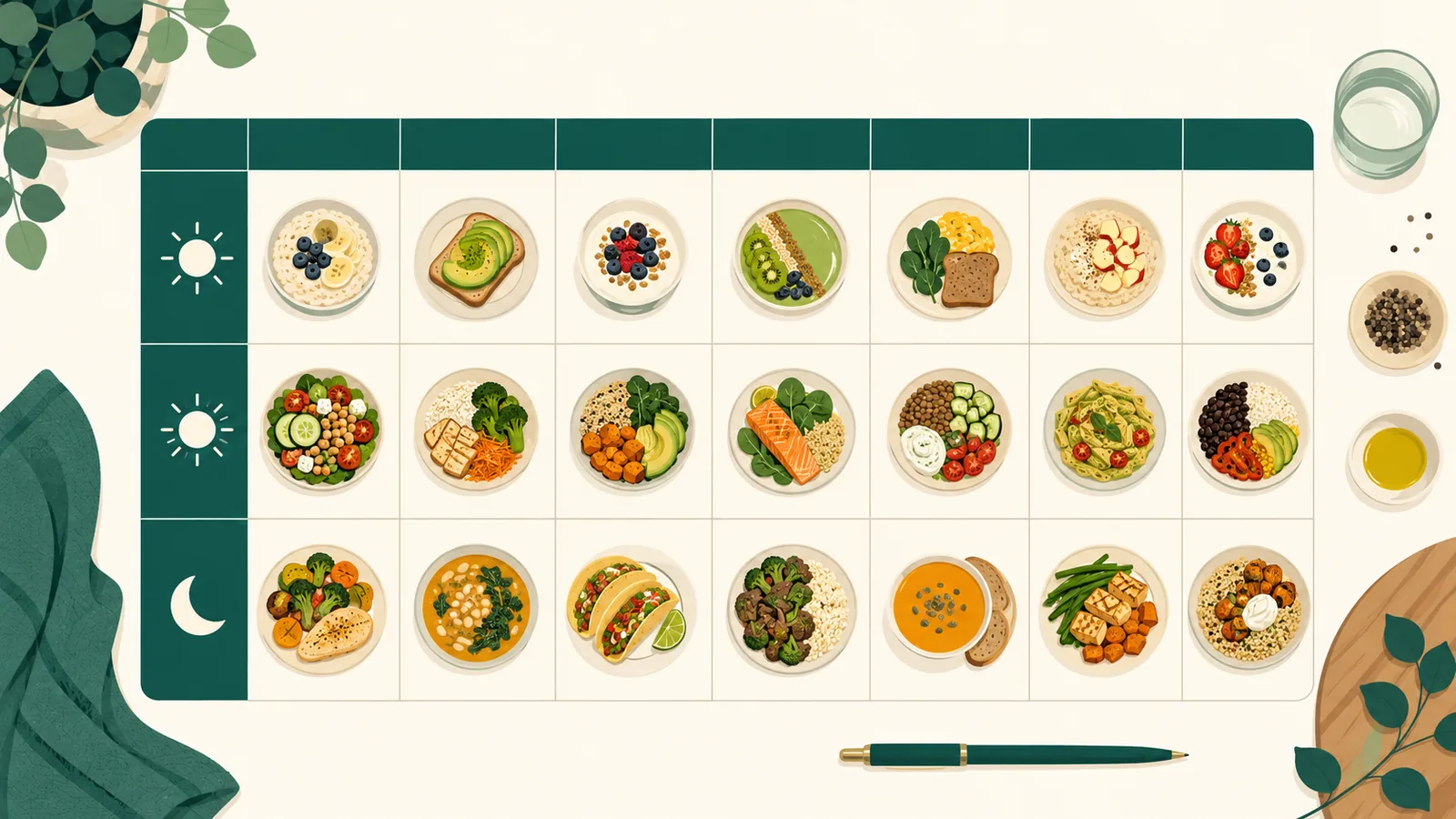
- Plan only weeknight dinners at first. They are the meals that suffer most from improvising.
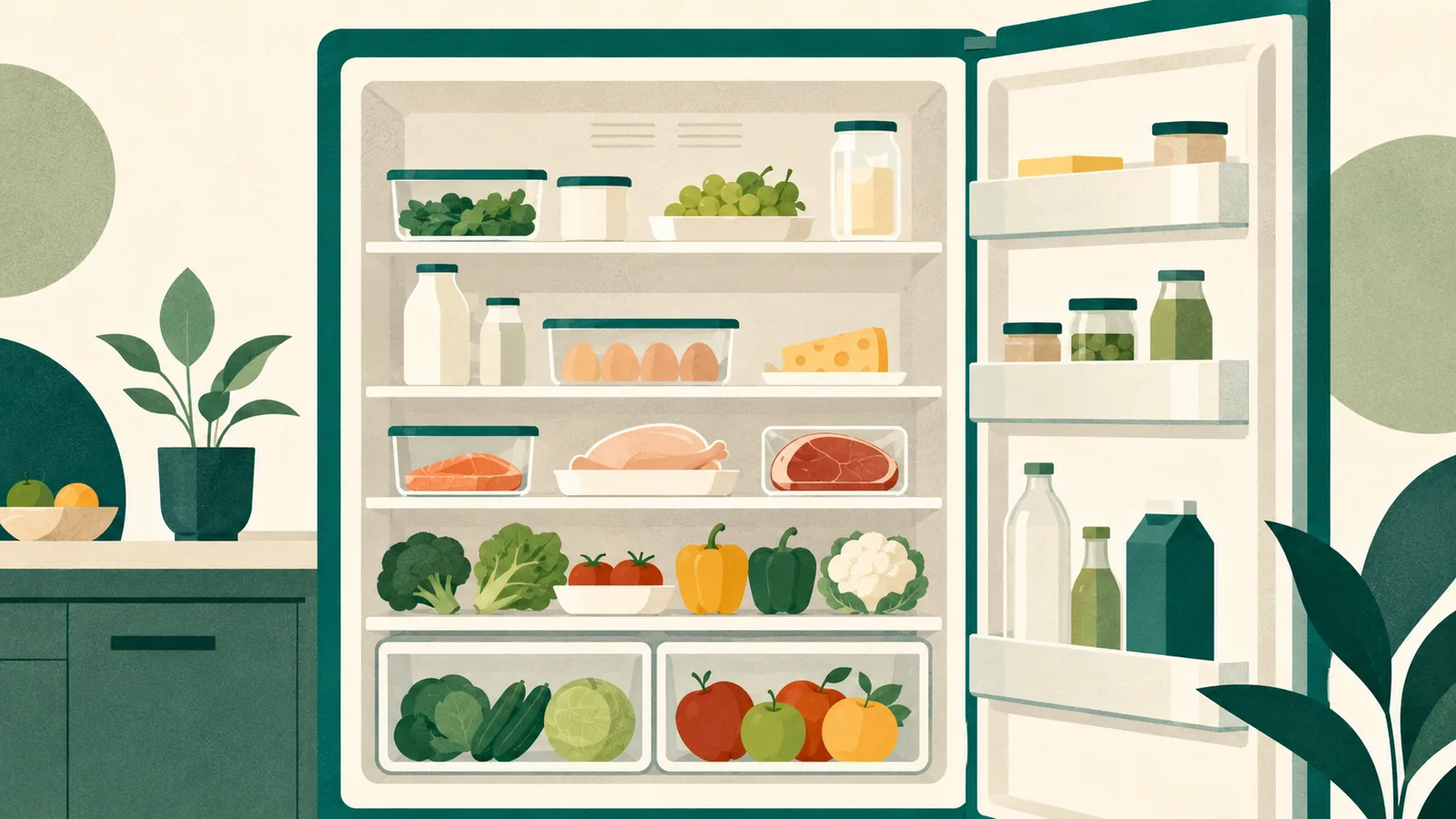
- Start from what you already have in the fridge and pantry.
- Repeat meals. Taco Tuesday works because nobody has to think about it.
- Leave one night free for leftovers, takeout or the unexpected.
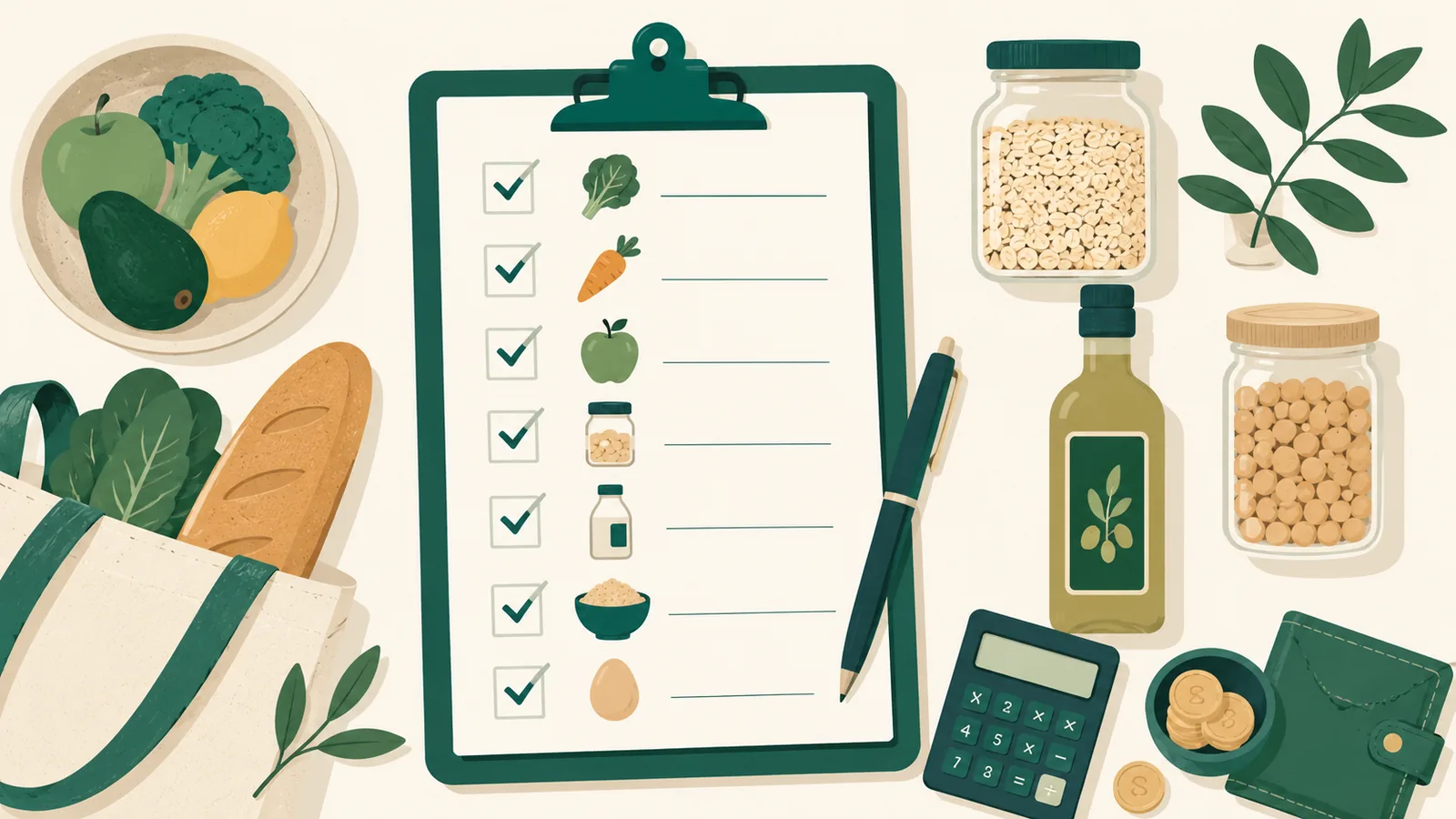
- Make the grocery list from the menu, not the other way around. See why shopping hungry makes you buy more.
Meal prep without risking your food
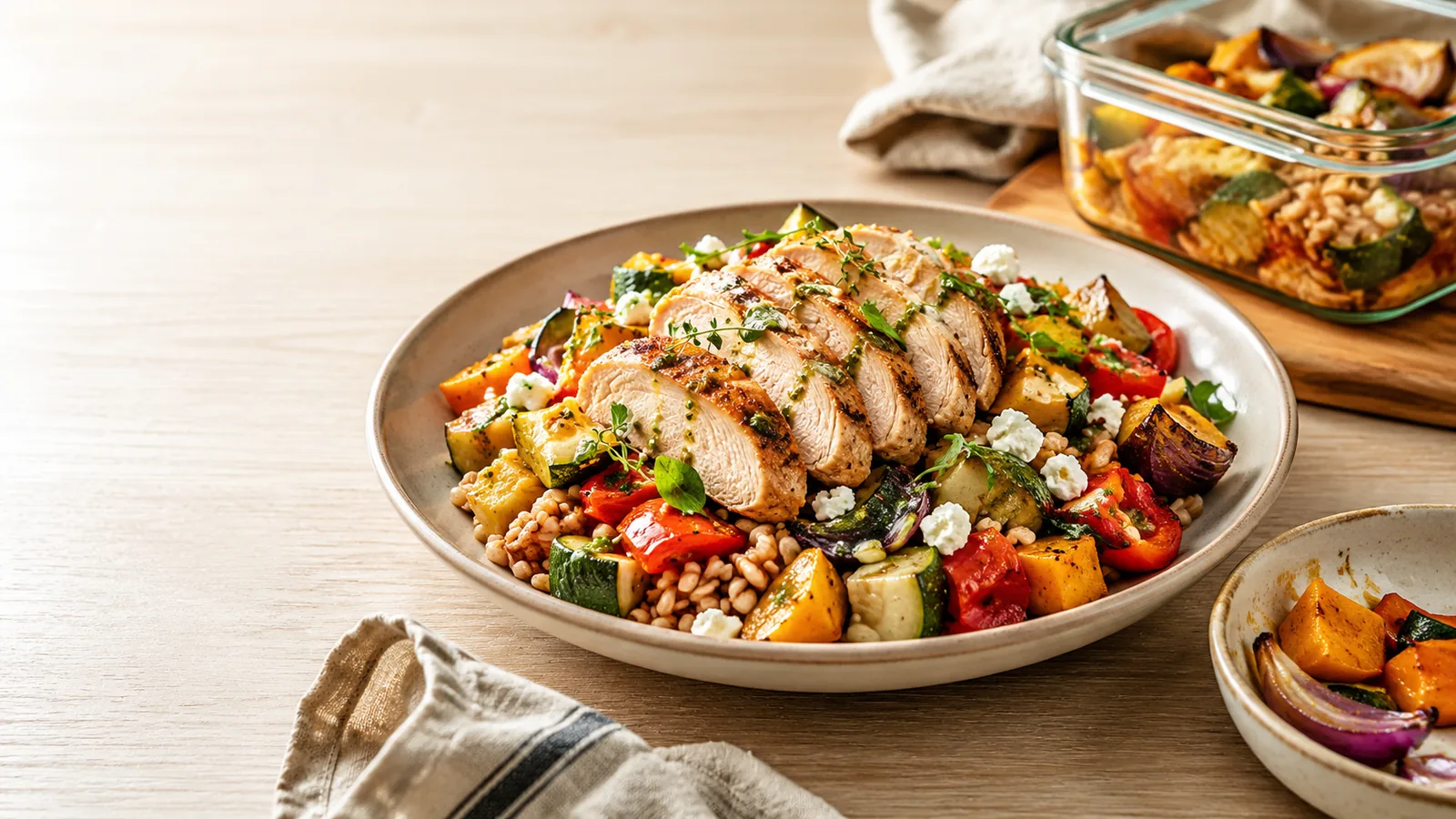
Cooking once and eating all week only works if food is cooled and stored properly. The USDA Food Safety and Inspection Service advises dividing large batches into shallow containers so they cool quickly, refrigerating within 2 hours, eating most leftovers within 3 to 4 days and reheating to 165°F, with sauces and soups brought to a boil.
In practice: what you will eat by Wednesday goes in the fridge, and the rest goes into the freezer in portions on the day you cook it.
Source: USDA FSIS, Leftovers and Food Safety.
A plan that survives a real week
- Plan 4 or 5 dinners, not 7. Leave room for leftovers, surprises and cravings.
- Reuse one base in different dishes. A rotisserie chicken becomes tacos, a salad and soup.
- Organize the list by store section so you are not zigzagging and grabbing impulse buys.
See also how to plan for leftovers.
Sources
- Ducrot P et al. Meal planning is associated with food variety, diet quality and body weight status in a large sample of French adults. International Journal of Behavioral Nutrition and Physical Activity, 2017. https://doi.org/10.1186/s12966-017-0461-7
- USDA Food Safety and Inspection Service. Leftovers and Food Safety. https://www.fsis.usda.gov/food-safety/safe-food-handling-and-preparation/food-safety-basics/leftovers-and-food-safety
Frequently asked questions
Does meal planning help you lose weight?
The study found an association between planning and lower odds of obesity, but it did not prove that one causes the other.
Do I need to plan every meal?
No. Starting with weeknight dinners takes the hardest decision of the day out of the most tired moment.
How long does meal prep last in the fridge?
The USDA says 3 to 4 days for most leftovers. Freeze anything beyond that, ideally on the day you cook it.
How long does planning the week take?
With practice, a few minutes: choose meals based on what you have and build the list from them.