Why mold shows up
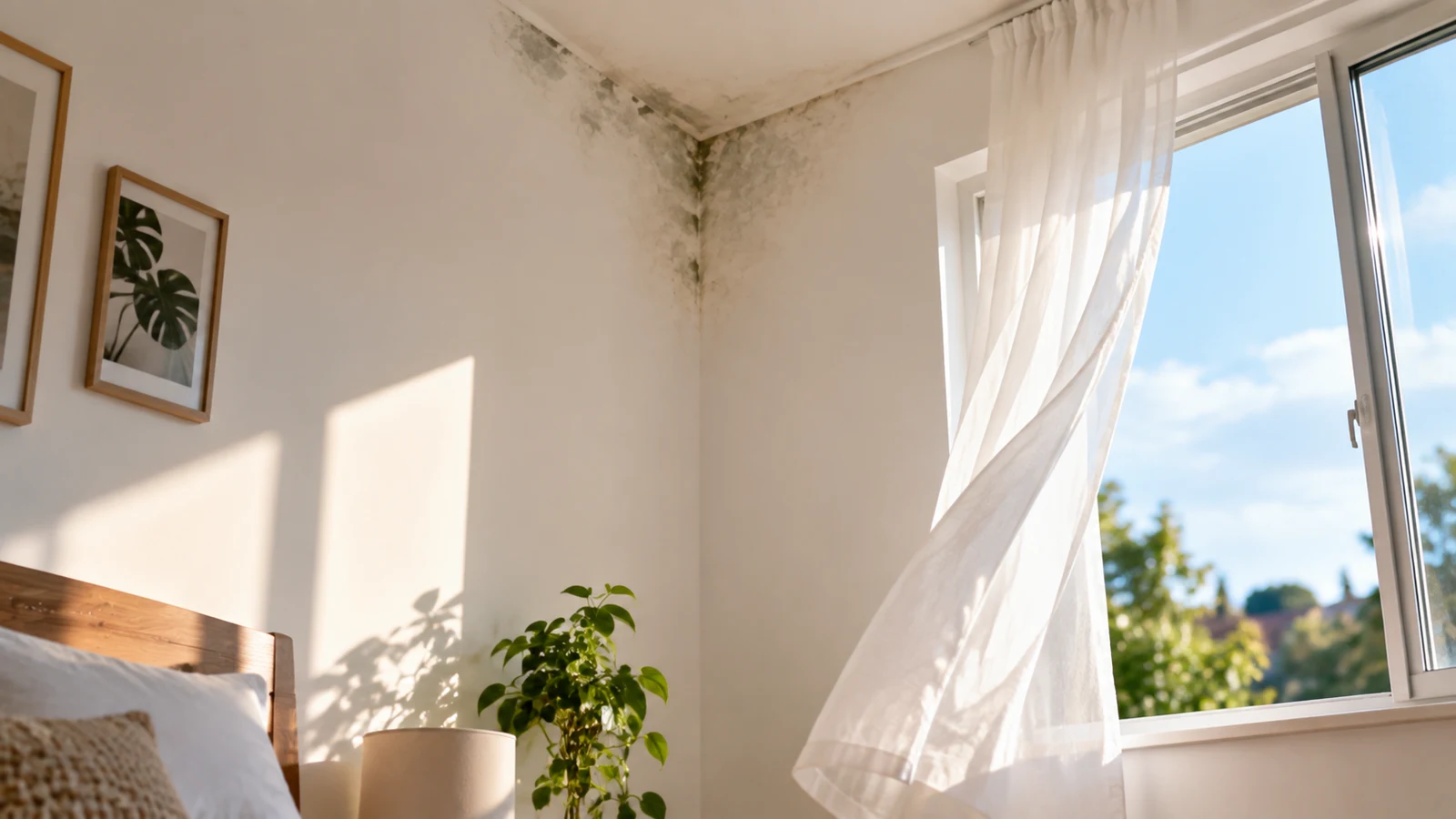
Mold is a fungus that grows on damp surfaces. The black or greenish spots in a bathroom corner, behind the dresser or on a basement wall are the visible part of a moisture problem.
The U.S. Environmental Protection Agency sums it up simply: the key to mold control is moisture control. If you do not fix the source of the water, mold comes back after you clean it.
Source: EPA, A Brief Guide to Mold, Moisture and Your Home.
Read also: How to make clothes last longer by washing them right and How to get rid of washing machine odor for good.
Why it is worth acting
The World Health Organization guidelines on dampness and mold indoors link exposure to more respiratory symptoms, allergies and asthma. Children and people with asthma or allergies deserve extra attention.
Source: WHO guidelines for indoor air quality: dampness and mould, 2009.
How to clean it safely
- Open windows and wear gloves, goggles and an N95 mask.
- On hard, washable surfaces, scrub with water and detergent, then dry completely.
- If you use bleach, follow the label and never mix it with ammonia or other cleaners, because the mix releases toxic gas.
- Porous materials heavily covered in mold, like drywall, ceiling tiles or carpet, may need to be cut out and replaced.
- Painting over mold without cleaning and drying first does not work: the stain comes back.
The EPA suggests calling a professional when the moldy area is larger than about 10 square feet, roughly a 3 by 3 foot patch, or when the mold comes from a leak or water damage. If you rent, tell your landlord in writing; moisture problems are often a building repair issue.
Condensation, leak or rising damp?
Treating the wrong problem is the most common reason mold comes back. Three clues help tell them apart:
- Condensation: spots in upper corners, near the ceiling and on exterior walls, worse in closed rooms and in winter. The water comes from indoor air.
- Leak: a stain that follows a pipe, spreads below a window or under the roof, with peeling paint or soft drywall. The water comes from outside or from plumbing.
- Ground moisture: damp, musty walls in a basement or crawl space, common in older homes without proper drainage.
The EPA advice applies to all three: without controlling moisture, mold returns after cleaning.
How to keep it from coming back
- Fix leaks, roof problems and clogged gutters.
- Run the bathroom exhaust fan during and after showers, and the range hood while cooking.
- Leave a few inches between furniture and exterior walls.
- Use a dehumidifier in the basement during humid months.
- The EPA recommends keeping indoor humidity ideally between 30% and 50%; an inexpensive hygrometer helps you track it.
- Dry any wet area within 24 to 48 hours.
Sources
- U.S. Environmental Protection Agency. A Brief Guide to Mold, Moisture and Your Home. https://www.epa.gov/mold/brief-guide-mold-moisture-and-your-home
- World Health Organization, Regional Office for Europe. WHO guidelines for indoor air quality: dampness and mould, 2009. https://www.who.int/publications/i/item/9789289041683
Frequently asked questions
What causes mold on walls?
Trapped moisture: leaks, poor ventilation or steam from showers and cooking condensing on cold walls.
Does bleach kill mold?
It helps on hard, washable surfaces when used as the label directs. Never mix it with ammonia or other products. Without fixing the moisture, mold returns.
Is mold bad for your health?
The WHO links damp, moldy homes to more respiratory symptoms, allergies and asthma.
When should I call a professional?
When the moldy area is larger than about 10 square feet, or when there is a leak or water damage behind it.