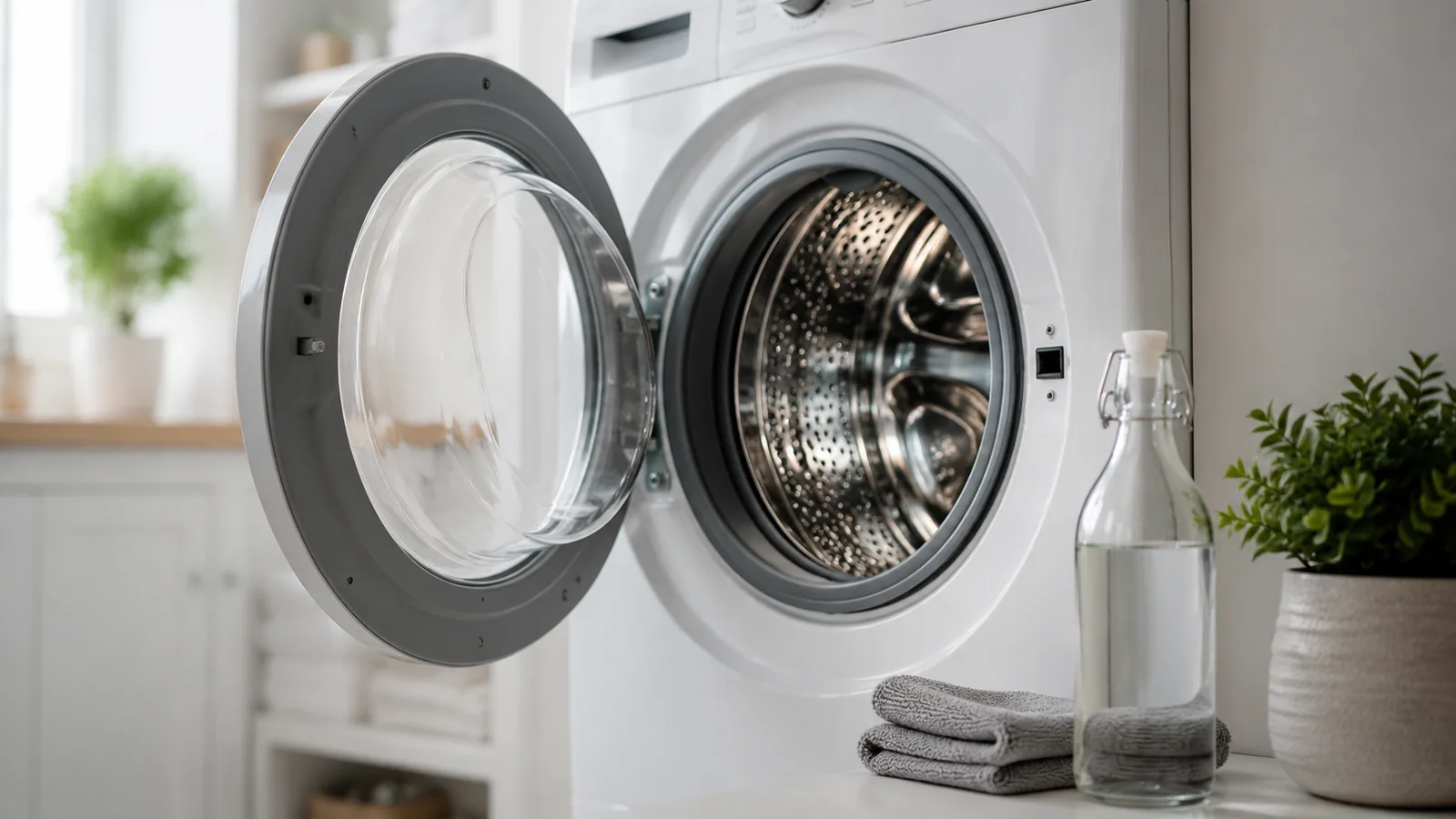
The machine that cleans needs cleaning too
It seems backward: an appliance full of water and detergent all day ends up smelling bad. But moisture, warmth and leftover detergent and lint are exactly what bacteria like. A team at Furtwangen University, in Germany, went looking for where they live.
Read also: How to make clothes last longer by washing them right and How to get the musty smell out of clothes in storage.
What the researchers found
In a study of 13 household machines, the team sampled the detergent drawer, the door seal, the water at the bottom and the lint from the wash. The detergent drawer had the widest variety of bacteria. The door seal had the highest share of Moraxella osloensis, a bacterium known for causing the musty laundry smell. The authors note that energy-saving habits, like washing cold and using liquid detergent without bleach, make it easier for microbes to survive.
Source: Jacksch et al., Microorganisms, 2020.
How many bacteria live there
In a second study, the group counted bacteria in 10 machines: an average of about 21,000 units per square centimeter, with peaks of up to 337,000. The cleanest spot was the top of the door seal, for a simple reason: it dries fastest. The problem is not that the machine is dirty, it is that it stays wet.
Source: Jacksch et al., Microorganisms, 2021.
What fixes it, based on the studies
- Leave the door and detergent drawer open after every wash so they dry. This matters most on front loaders, the type with the rubber gasket.
- Wipe the door gasket regularly, especially the bottom fold where water collects.
- Remove and rinse the detergent drawer; leftover detergent and softener feed bacteria.
- Run the Clean Washer or Tub Clean cycle once a month, or a hot cycle with a powder detergent that contains bleach, if your manual allows.
- Use HE detergent and the right dose. Too much does not clean better and leaves residue.
What if the clothes already smell?
Clothes that come out smelling bad usually picked it up from the machine or from sitting wet too long inside it. Move them to the dryer or a drying rack as soon as the cycle ends. Stored clothes have a different problem, explained in how to get the musty smell out of clothes.
Read also: How to lower your electric bill.
Sources
- Jacksch S et al. Influence of Sampling Site and other Environmental Factors on the Bacterial Community Composition of Domestic Washing Machines. Microorganisms, 2020. https://www.ncbi.nlm.nih.gov/pmc/articles/PMC7022543/
- Jacksch S et al. Cultivation-based quantification and identification of bacteria at two hygienic key sides of domestic washing machines. Microorganisms, 2021. https://pmc.ncbi.nlm.nih.gov/articles/PMC8146927/
Frequently asked questions
Why does my front loader smell more than my old top loader?
Front loaders seal tightly with a rubber gasket that traps moisture. Leaving the door open to dry makes a big difference.
Does vinegar fix washing machine smell?
It can help with residue, but the studies point to drying the machine and cleaning the gasket and drawer as the key steps. Follow your manual.
How often should I clean my washer?
Wipe the gasket weekly and run a cleaning cycle about once a month.
Does washing in cold water cause the smell?
Cold washes save energy, but the study notes they make it easier for bacteria to survive. A periodic hot cleaning cycle helps.