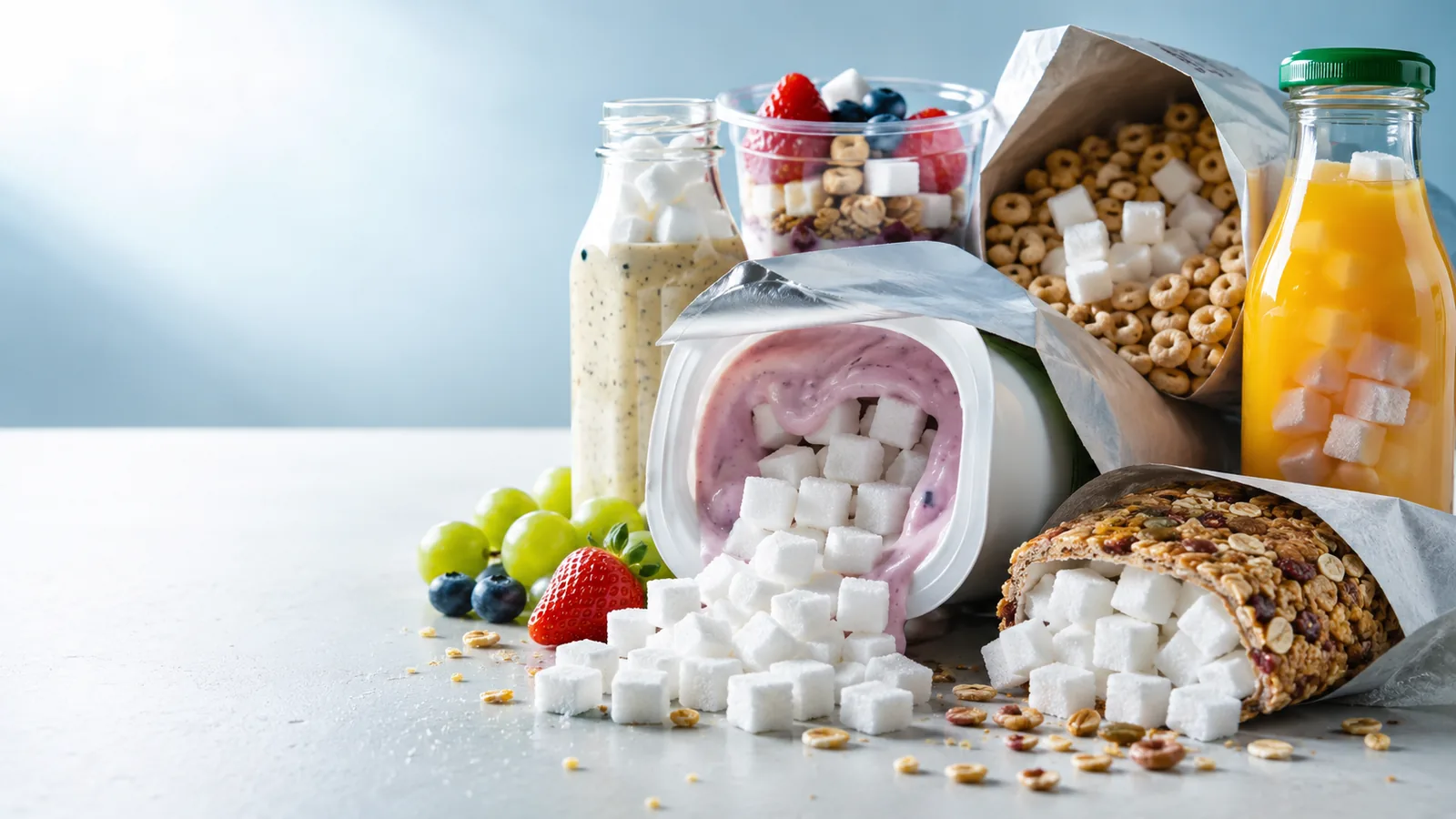
Why sugar goes unnoticed
Few people stir six spoonfuls of sugar into their coffee, but many eat that much without noticing over a day. Added sugar shows up in foods that do not even taste sweet: jarred pasta sauce, sandwich bread, salad dressings, barbecue sauce and "whole grain" cereals. A flavored latte in the morning, a flavored yogurt at lunch and a granola bar in the afternoon can add up to most of the daily limit.
Read also: Too much caffeine: signs you are overdoing it and Smart grocery list: how to save without cutting what you love.
How much is too much
The World Health Organization recommends keeping free sugars below 10% of daily calories, ideally below 5%. On a 2,000-calorie diet, 5% is about 25 grams, roughly 6 teaspoons. Free sugars include sugar added by manufacturers or at home, plus honey, syrups and fruit juice; the sugar in whole fruit and plain milk does not count.
Source: WHO, Guideline: Sugars intake for adults and children.
How to find it on the label
The FDA's Nutrition Facts label lists "Includes Xg Added Sugars" right under Total Sugars, with a % Daily Value. The Daily Value for added sugars is 50 grams on a 2,000-calorie diet, so a product with 20% DV gives you a fifth of the day's limit in one serving. As a rule of thumb, 5% DV or less is low and 20% DV or more is high.
In the ingredient list, sugar hides under other names: high fructose corn syrup, cane sugar, dextrose, maltose, rice syrup, agave and honey. Ingredients are listed by weight, so the closer to the top, the more there is.
Source: FDA, Added Sugars on the Nutrition Facts Label.
Where it hides most
- Drinks: sodas, sweet tea, sports and energy drinks, bottled coffee drinks and juice.
- Breakfast: flavored yogurt, cereal, granola, flavored oatmeal packets.
- Savory foods: pasta sauce, ketchup, dressings, bread and deli meats.
- "Healthy" snacks: protein bars, granola bars and smoothies.
Simple swaps
Swap flavored yogurt for plain yogurt with fruit, juice for whole fruit or water, and jarred sauce for a quick homemade one. You do not need to cut all sweets: trimming the hidden sugar frees room for the treats you actually choose. People with diabetes or other conditions should adjust their diet with a doctor or registered dietitian.
What health authorities advise
The Dietary Guidelines for the Brazilian Population (in Portuguese), from Brazil's Ministry of Health, recommend using salt, sugar, oils and fats in small amounts and avoiding ultra-processed foods such as filled cookies, packaged snacks and soft drinks. According to the guidelines, eating too much sugar raises the risk of tooth decay, obesity and several other chronic diseases.
The document also explains how to use the ingredient list: a long list, often five items or more, and unfamiliar names such as fructose syrup point to an ultra-processed product.
Source: Brazil's Ministry of Health, Dietary Guidelines.
Sources
- World Health Organization. Guideline: Sugars intake for adults and children, 2015. https://www.who.int/publications/i/item/9789241549028
- FDA. Added Sugars on the Nutrition Facts Label. https://www.fda.gov/food/nutrition-facts-label/added-sugars-nutrition-facts-label
- Brazil's Ministry of Health. Guia Alimentar para a População Brasileira (Dietary Guidelines for the Brazilian Population), 2nd edition. Brasília, 2014 (in Portuguese). https://bvsms.saude.gov.br/bvs/publicacoes/guia_alimentar_populacao_brasileira_2ed.pdf
Frequently asked questions
How much added sugar is too much?
The WHO recommends less than 10% of daily calories from free sugars, ideally under 5%, about 25 grams on a 2,000-calorie diet.
Where do I find added sugars on the label?
On the Nutrition Facts label, under Total Sugars, as "Includes Xg Added Sugars" with a % Daily Value.
Does fruit sugar count?
Not the sugar in whole fruit. Fruit juice, honey and syrups do count as free sugars.
Are "no sugar added" products sugar-free?
Not necessarily. They may contain natural sugars from fruit or milk. Check Total Sugars on the label.