Dreaming about macumba or umbanda: what is usually at stake
Dream interpretation is not prediction and not diagnosis. This article separates what sleep research observes from what popular interpretation associates with the theme, always saying which is which.
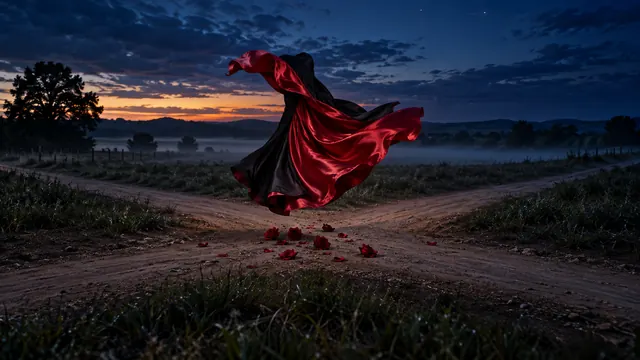
Dreaming about macumba is not proof that someone has done a "trabalho" (a spell or ritual work) against you, nor a warning of punishment or danger. The offering that frightens you tends to appear in phases of vague fear, conflict with someone close or a feeling that everything is going wrong. A calm gira, the umbanda ceremony with songs and drums, on the other hand, tends to come with a search for comfort or curiosity about faith.
"Macumba" is a popular Brazilian term of Bantu origin that, in everyday use, became a generic label for anything coming from the Afro-Brazilian religions, often loaded with prejudice. Umbanda and candomblé are religions, with history, ethics and community, and Brazil's Constitution protects freedom of belief. We use "macumba" here because that is how many people search for this dream, not as a judgment.
Read also: Dreaming about Pomba Gira and Dreaming about Exu.
Why the offering and the terreiro show up in the dream
The continuity hypothesis, tested by Michael Schredl and Friedrich Hofmann in 2003, holds that dreams reuse what filled waking life. People who attend a terreiro, the Afro-Brazilian house of worship, dream of its songs and of the colors of the guias, the sacred bead necklaces. People who have never been to one dream about it too: they saw a despacho, an offering left at a crossroads, watched a soap opera or grew up hearing scary stories about the subject.
When the scene turns into a nightmare, it follows familiar scripts: in 2018, Michael Schredl and Anja Göritz analyzed adults' recent nightmares and found, among the most frequent themes, being chased and seeing people close to you in danger. The offering at the front door is often the Brazilian shape of that vague threat.
Sources: Schredl and Hofmann, Continuity between waking activities and dream activities, Consciousness and Cognition, 2003; Schredl and Göritz, Nightmare Themes, Journal of Clinical Sleep Medicine, 2018.
Freud, Jung and faith before the terreiro
In Freud's psychoanalysis. In The Interpretation of Dreams, Freud quotes the French scholar Alfred Maury, who said that in his own dreams he fell victim to the very superstition he fought in his writings. The dream uses the images at hand, and the fear of a "trabalho" may carry another subject: a perceived envy, an unresolved quarrel.
In Jung's psychology. In Man and His Symbols, Jung laments that modern life has lost contact with religious symbols, which dreams keep bringing back. In this key, a calm spiritual entity can be read as the voice of inner wisdom.
In symbols and faith. Chevalier and Gheerbrant, in A Dictionary of Symbols, treat the crossroads as a place of choice and of meeting the unknown. In umbanda and candomblé, the offering is a gesture of thanks and of asking, addressed to the orixás (the deities of these traditions) and to the spirit entities, not an attack. In the myths gathered by Reginaldo Prandi in Mitologia dos orixás, Exu is the messenger who carries the requests. In many houses, the dream is brought to the pai or mãe de santo, the priest or priestess who leads the community; some Christian churches, on the other hand, see it as a warning and recommend prayer. These are readings of faith.
Bringing both readings together. Science explains how an image seen on the street or an old fear reaches the dream. Faith asks what you are seeking and what you need to protect yourself from.
Sources: Freud, Die Traumdeutung, 1900; Jung (ed.), Man and His Symbols; Chevalier and Gheerbrant, A Dictionary of Symbols; Prandi, Mitologia dos orixás.
The most common scenes with macumba, terreiro and gira
| Scene | What usually goes with it |
|---|---|
| Seeing an offering at a crossroads or at your front door | Fear of envy or of the "evil eye", conflict with someone |
| Touching, kicking or stepping on an offering | Guilt, worry about having disrespected someone, fear of consequences |
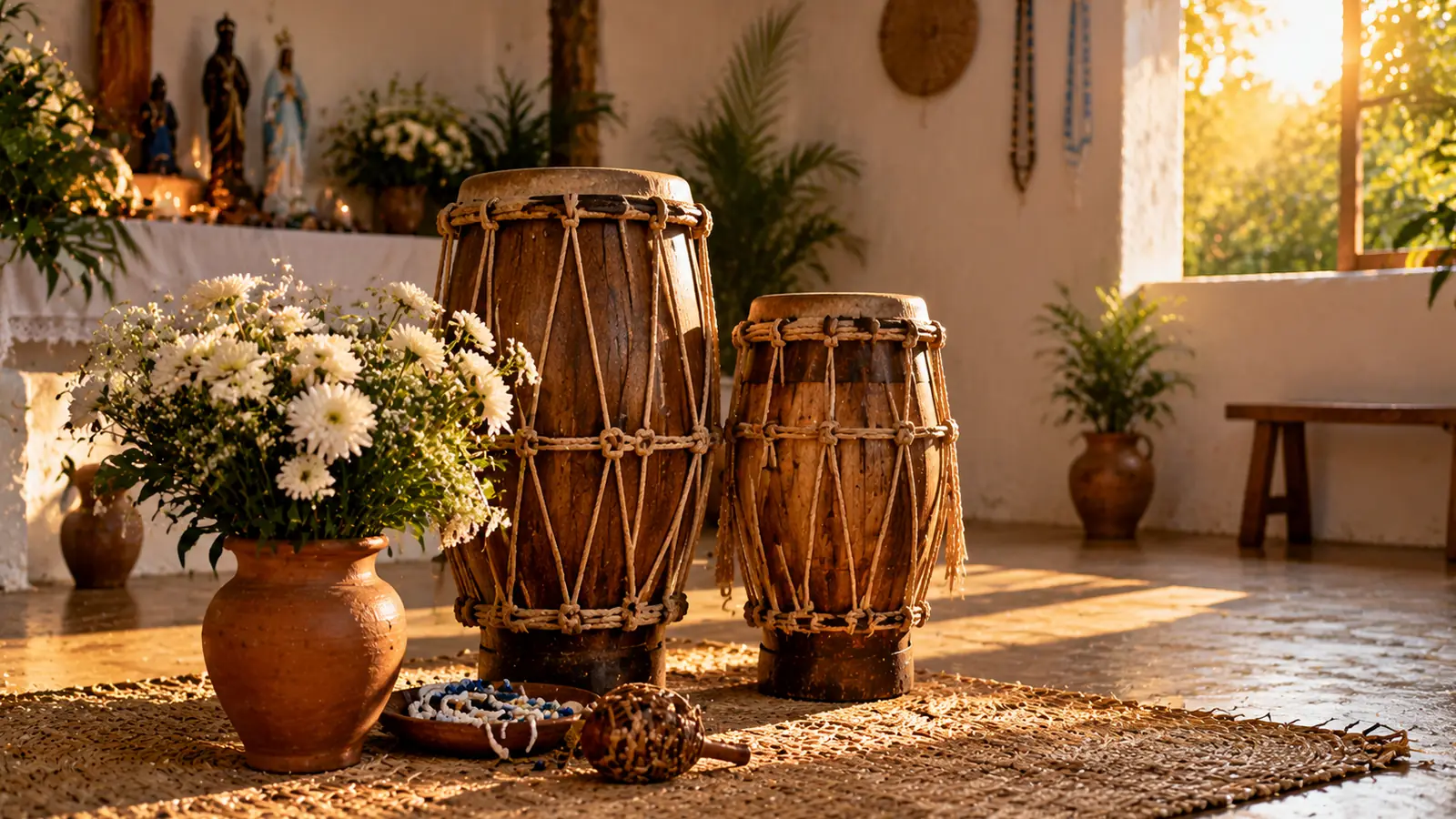
| Being in a terreiro, dressed in white, listening to atabaque drums | A search for comfort, curiosity about faith, family memories |
| Seeing someone incorporate a spirit during a gira | Recent contact with the religion, doubts about mediumship |
| Receiving a passe (a blessing given with the hands) or advice from a preto-velho or a caboclo | A need for care and advice |
| Finding out that someone "did a trabalho" against you | Distrust, a feeling that things go wrong for no reason |
If the scene featured a specific entity or orixá, read also dreaming about a preto-velho (the spirit of an elderly enslaved African, a figure of wisdom in umbanda), dreaming about a caboclo (the spirit of an Indigenous Brazilian) and dreaming about Iemanjá, the orixá of the sea.
See also: Dreaming about the Buddha and Dreaming about your husband cheating.
When the dream about macumba calls for care
Most of the time, the dream passes and only the strange memory remains. It deserves attention when the fear of a "trabalho" continues during the day, keeps you from sleeping, makes you pull away from people or avoid leaving the house. Repeated nightmares can be treated, and a health professional can help without asking you to give up your faith. See also how to have fewer nightmares.
A practical precaution: be wary of anyone, of any religion, who uses your fear to ask for money or promises to solve everything at once.
Source: Morgenthaler and colleagues, Journal of Clinical Sleep Medicine, 2018.
Macumba and umbanda in dream books
O Livro dos Sonhos, a Brazilian dream book by L. P. Baçan, has no entry for macumba, umbanda, candomblé or terreiro. The closest is the generic figure of the sorcerer, from the European tradition: in life, a defeated enemy; in love, affection. The book does not describe the Afro-Brazilian religions.
Jung recalled, in Man and His Symbols, that dream symbols do not fit into lists, because each image is born from the life of the dreamer. The terreiro of someone who grew up in one and the terreiro of someone who only heard about it do not say the same thing.
Sources: L. P. Baçan, O Livro dos Sonhos, 2014; Jung (ed.), Man and His Symbols.
What Brazilian popular belief says about this dream
In the popular reading, a well-tended offering speaks of protection, and a lit candle, of a request that was heard. As for colors, white recalls peace and Oxalá, the orixá linked to creation and calm; red and black, the people of Exu. Stepping on an offering would be a call to be careful with your words. These are beliefs of the tradition, not predictions. See what dream meanings look like according to science and culture.
Sources
- Schredl M, Hofmann F. Continuity between waking activities and dream activities. Consciousness and Cognition, 2003. https://doi.org/10.1016/S1053-8100(02)00072-7
- Schredl M, Göritz AS. Nightmare Themes: An Online Study of Most Recent Nightmares and Childhood Nightmares. Journal of Clinical Sleep Medicine, 2018. https://doi.org/10.5664/jcsm.7002
- Morgenthaler TI et al. Position Paper for the Treatment of Nightmare Disorder in Adults: An American Academy of Sleep Medicine Position Paper. Journal of Clinical Sleep Medicine, 2018. https://doi.org/10.5664/jcsm.7178
- Freud S. The Interpretation of Dreams (Die Traumdeutung), 1900. Project Gutenberg. https://www.gutenberg.org/ebooks/66048
- Jung CG (ed.). Man and His Symbols, 1964. Portuguese edition consulted: O homem e seus símbolos, Nova Fronteira/HarperCollins Brasil. https://www.skoob.com.br/book/8435
- Chevalier J, Gheerbrant A. A Dictionary of Symbols (Dictionnaire des symboles). Portuguese edition consulted: Dicionário de símbolos, José Olympio/Record. https://www.record.com.br/products/dicionario-de-simbolos
- Prandi R. Mitologia dos orixás (Mythology of the Orishas). São Paulo: Companhia das Letras, 2001. https://www.companhiadasletras.com.br/livro/9788535900644/mitologia-dos-orixas
- Baçan LP. O Livro dos Sonhos (Brazilian dream book). Self-published, 2014.
Frequently asked questions
Does dreaming about macumba mean someone did a spell against me?
No. The scene usually reflects fear, distrust or conflict with someone, and also images seen on the street or on television.
Are macumba and umbanda the same thing?
Not exactly. "Macumba" is a popular Brazilian term, often used with prejudice, to speak generically about the Afro-Brazilian religions. Umbanda and candomblé are distinct religions, each with its own history and foundations.
What does it mean to dream that I stepped on an offering?
The scene usually comes with guilt or worry about having disrespected someone. In popular belief, it is a call to be careful with your words. It is tradition, not a warning of punishment.
Does dreaming that I am in a terreiro mean I am a medium?
The dream does not diagnose that. In the religions of African origin, this is discerned over time, within a house of worship.
What is the spiritual meaning of dreaming about macumba or umbanda?
For people of axé, as members of these religions call themselves, the dream can be read as contact with orixás and entities, and the reading belongs to each person's house. These are readings of faith, without proof, and not predictions.