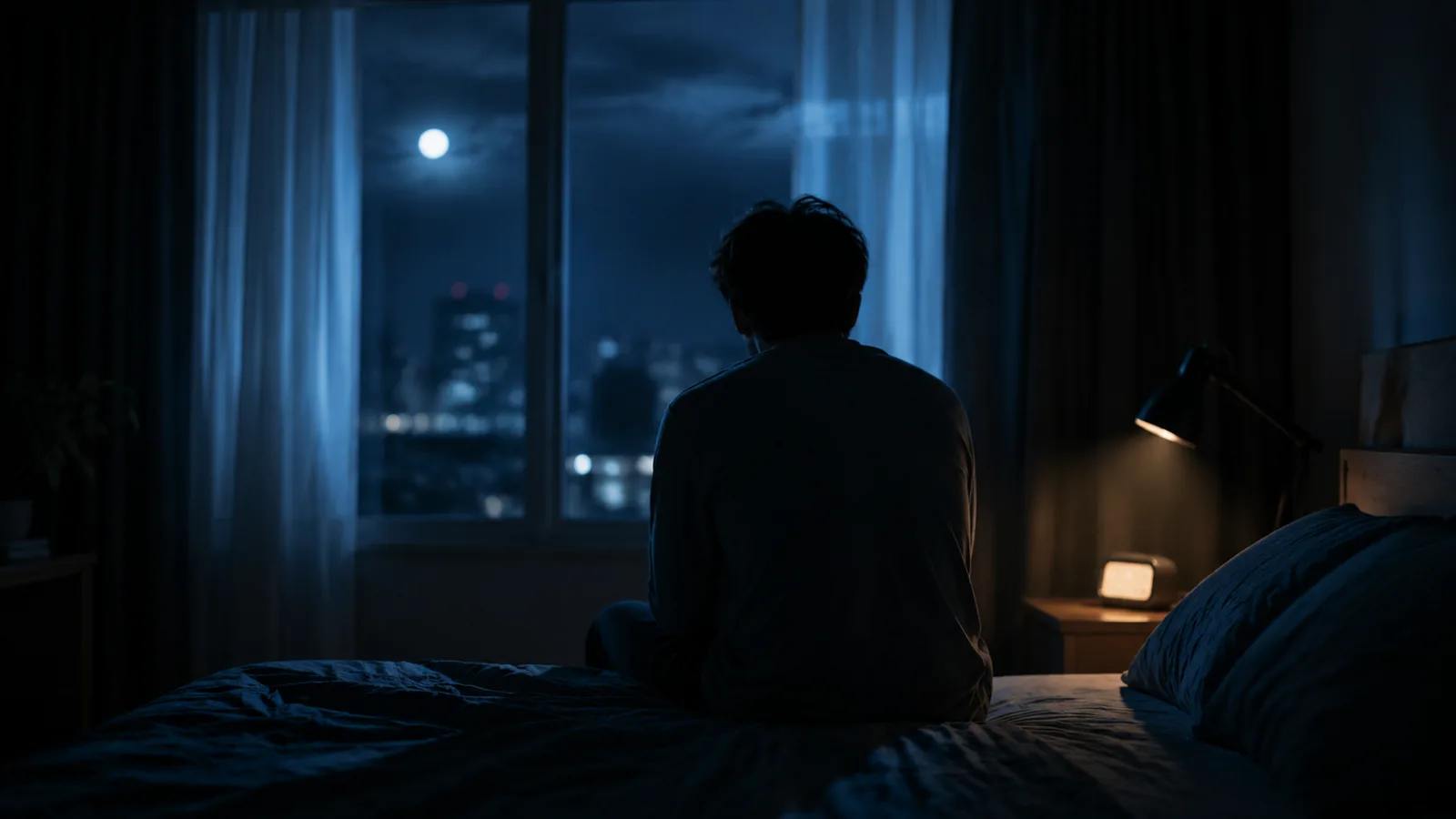
Waking up is normal, up to a point
Sleep runs in cycles, and brief awakenings are part of them. Most people don't even remember them. The problem is waking up many times, staying awake for long and starting the day tired.
Common causes
- Alcohol helps you fall asleep but breaks up the second half of the night.
- Caffeine late in the day.
- Worry and anxiety.
- Needing to pee, sometimes from drinking a lot at night.
- Noise, light and heat.
Source: NHS, insomnia.
Watch out for sleep apnea
Loud snoring, pauses in breathing noticed by a partner, gasping at night and strong daytime sleepiness can be signs of sleep apnea, according to the US National Heart, Lung, and Blood Institute. It needs diagnosis and treatment.
Source: NHLBI, sleep apnea.
The glass of wine that disrupts the second half of the night
Alcohol makes you drowsy and helps many people fall asleep faster, so it looks like an ally. A review in Alcoholism: Clinical and Experimental Research showed the other side: once the body starts clearing the drink, in the second half of the night, sleep becomes lighter and more broken.
In practice, it is common to sleep well in the first hours and wake up in the small hours, struggling to fall back asleep. The bigger the dose and the closer to bedtime, the stronger the effect. Skipping alcohol at night is one of the simplest tests for anyone who wakes up often.
Source: Ebrahim et al., Alcohol and Sleep I, Alcoholism: Clinical and Experimental Research, 2013.
The recommended treatment for insomnia does not start with pills
When waking up at night becomes routine for months, it may be chronic insomnia. The American College of Physicians recommends cognitive behavioral therapy for insomnia, known as CBT-I, as the first option, before medication.
CBT-I combines techniques such as keeping regular hours, getting out of bed when sleep does not come, using the bed only for sleep and working on the thoughts that feed worry about sleep. It is delivered by trained health professionals over a few sessions. If the problem has lasted for weeks, it is worth asking a doctor about this option.
Source: Qaseem et al., American College of Physicians guideline, Annals of Internal Medicine, 2016.
What helps and when to get help
Regular times, less alcohol and caffeine at night, a dark cool room and fewer drinks before bed help. See a doctor if awakenings go on for weeks, if there is snoring with breathing pauses, or if you get up to pee several times every night. See also nighttime habits for better sleep.
What sleep experts say
According to Agência FAPESP (in Portuguese), chronic insomnia affects about 10% of the population and is defined as the problem occurring at least three times a week for three months or more.
In a report by Jornal da USP (in Portuguese), psychologist Renatha El Rafihi Ferreira, a professor at the University of São Paulo Institute of Psychology, calls cognitive behavioral therapy for insomnia "the gold standard treatment for insomnia". In the study she coordinated, 60% of participants reported using sleep medication. In the same report, neurologist Rosa Hasan, a sleep medicine specialist, says that stopping these medications after long-term use should be guided by a doctor.
Sources: Jornal da USP, sleep medication and alternatives; Agência FAPESP, psychotherapy for insomnia.
Sources
- NHS. Insomnia. https://www.nhs.uk/conditions/insomnia/
- NHLBI. Sleep Apnea. https://www.nhlbi.nih.gov/health/sleep-apnea
- Ebrahim et al., Alcohol and Sleep I, Alcoholism: Clinical and Experimental Research, 2013. https://doi.org/10.1111/acer.12006
- Qaseem et al., American College of Physicians guideline, Annals of Internal Medicine, 2016. https://doi.org/10.7326/M15-2175
- Caires, Luiza. Brasileiros estão tomando muito remédio para dormir, quando há alternativas eficazes. Jornal da USP, 2026. https://jornal.usp.br/ciencias/brasileiros-estao-tomando-muito-remedio-para-dormir-quando-ha-alternativas-eficazes/
- Ziegler, Maria Fernanda. Estudo compara e atesta a eficácia de duas abordagens de psicoterapia no tratamento da insônia. Agência FAPESP, 2024. https://agencia.fapesp.br/estudo-compara-e-atesta-a-eficacia-de-duas-abordagens-de-psicoterapia-no-tratamento-da-insonia/52990
Frequently asked questions
Does alcohol help you sleep?
It may help you fall asleep but usually breaks up the second half of the night.
Is waking at the same time every night a problem?
Not always. If it comes with daytime tiredness, review your habits and talk to a doctor.
How do I know if I have sleep apnea?
Loud snoring with pauses in breathing and strong daytime sleepiness are signs listed by the NHLBI. Diagnosis is medical.