What a deepfake is
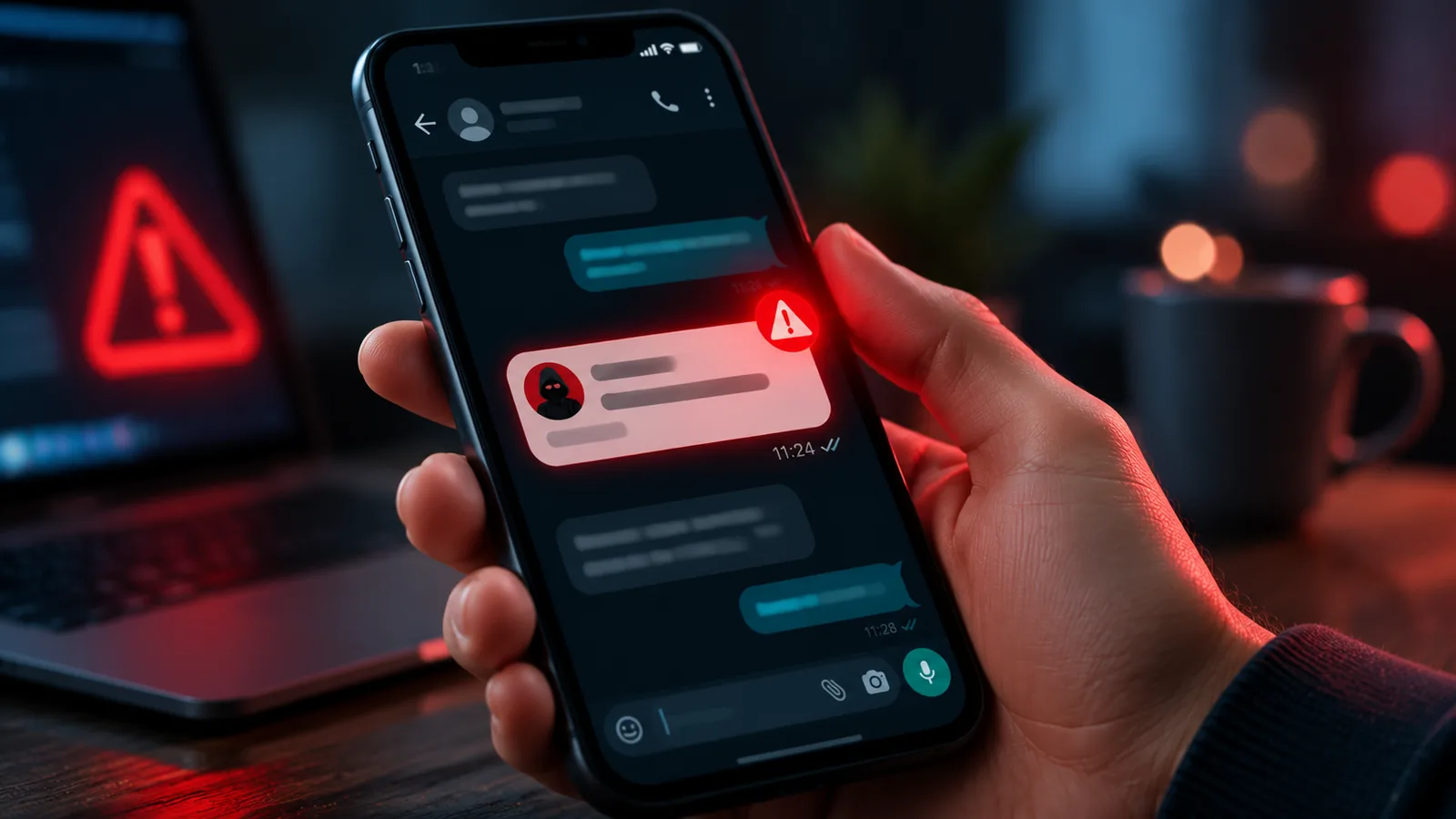
A deepfake is a video, audio clip or image created or altered by artificial intelligence to show someone saying or doing something they never said or did. The name combines "deep learning," the machine learning technique behind it, with "fake."
The technology has legitimate uses, like dubbing and movie effects. The problem starts when it is used for scams, harassment or disinformation: a fake video of a celebrity endorsing a crypto scheme, a cloned voice of a grandchild asking for bail money, a doctored photo meant to humiliate someone.
Read also: How to spot a fake website before you type your password and Fake job scam on WhatsApp: how to spot it.
Why they are so hard to catch
Researchers published an experiment in the journal iScience in which participants watched real videos and deepfakes and had to say which were fake. Performance was only slightly better than chance. Worse, people were overconfident in their ability to spot the fakes, and offering a cash reward for getting it right did not improve results.
The authors' conclusion is that trusting your eyes is not enough. What actually protects you is questioning the context and verifying through another channel.
Signs that can give it away
No single sign proves something is fake, and the tools get better every year. Still, watch for:
- lips that do not quite match the words, especially on sounds like "p," "b" and "m";
- odd blinking, a fixed stare or expressions that shift suddenly;
- blurry or flickering edges around the face, hair or ears;
- lighting on the face that does not match the rest of the scene;
- a voice with no breathing, flat intonation or abrupt cuts;
- strange hands, teeth or glasses in images.
The test that works: verify outside the video
The Federal Trade Commission has warned that scammers use AI voice cloning in family emergency schemes: a call that sounds exactly like a loved one in trouble, asking for money fast. Since your ears can be fooled, rely on a method:
- Be suspicious of urgency. Requests for money, flash deals and shocking news are where scams thrive.
- Hang up and call back on the number you already have saved for that person.
- Agree on a family code word to confirm real emergencies.
- Never pay by wire transfer, gift cards or crypto because someone on the phone insists.
- Look for the original source. If a celebrity announced something, it would be on their official accounts or in major news outlets.
- Run a reverse image search to see where a photo appeared before.
Source: Federal Trade Commission, Scammers use AI to enhance their family emergency schemes, 2023.
If you are targeted
Save screenshots, links and dates, and report the content on the platform where it appeared. If you lost money, call your bank right away and report it at ReportFraud.ftc.gov and to the FBI's Internet Crime Complaint Center at ic3.gov. Sexually explicit deepfakes made without consent are now a federal crime under the TAKE IT DOWN Act, which also requires platforms to remove them within 48 hours of a valid request from the victim. An attorney can advise on next steps.
Sources
- Köbis NC, Doležalová B, Soraperra I. Fooled twice: People cannot detect deepfakes but think they can. iScience, 2021. https://doi.org/10.1016/j.isci.2021.103364
- Federal Trade Commission. Scammers use AI to enhance their family emergency schemes, 2023. https://consumer.ftc.gov/consumer-alerts/2023/03/scammers-use-ai-enhance-their-family-emergency-schemes
Frequently asked questions
What is a deepfake?
A video, audio clip or image created or altered by AI to imitate a real person.
Can you spot a deepfake just by looking?
Not reliably. An iScience study found people did only slightly better than chance and were overconfident. Checking the source is safer.
Do scammers use voice cloning?
Yes. The FTC has warned about calls that imitate a relative in trouble asking for money. Hang up and call back on a number you know.
What should I do if someone makes a deepfake of me?
Save the evidence, report it on the platform, file a report with the FTC or IC3 if money was involved, and talk to an attorney.