Dreaming about a garden: what it suggests and what it does not
Dream interpretation is not prediction and not diagnosis. This article separates what sleep research observes from what popular interpretation associates with the theme, always saying which is which.
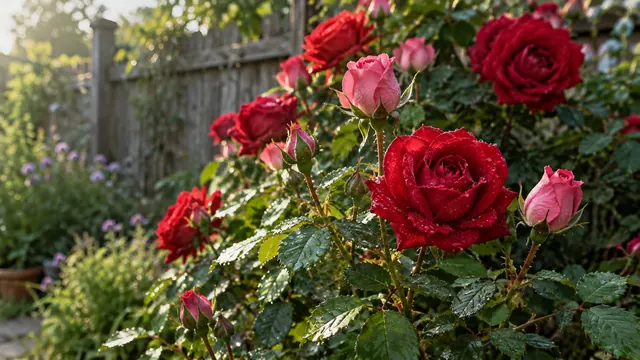
Dreaming about a garden does not announce an inheritance, a move or news of a pregnancy. The garden tends to appear in phases when a person is caring for something that takes time: a relationship, a child, a project, their own health. The state of the garden follows the state of that care. Flowerbeds in bloom come with satisfaction; tall weeds and dried-up plants come with a sense of falling behind or of neglect.
It is also a dream of rest. Someone who is exhausted dreams of a garden the way one looks for a bench in the shade. In that case the scene is not talking about any task at all, only about the wish to stop for a while.
Read also: Dreaming about crops or a vegetable garden and Dreaming about flowers.
Why the garden enters the dream
The continuity hypothesis, by Michael Schredl and Friedrich Hofmann (2003), observes that the day's activities carry on in dreams, including the small ones. Watering the plants on the balcony, walking through the town square on the way to work, watching a landscaping video or pulling weeds in the backyard on Saturday are experiences the dream reuses with ease.
There is also the garden nobody has anymore, the one at grandma's house or at school. Childhood places come back often in dreams, and the garden usually comes along with the sense of safety of that time. When the bedroom is stuffy or smells of earth after the rain, the body can give an extra push, as Dement and Wolpert showed in 1958 when they observed outside stimuli entering the plot of a dream.
Sources: Schredl and Hofmann, Continuity between waking activities and dream activities, Consciousness and Cognition, 2003; Dement and Wolpert, Journal of Experimental Psychology, 1958.
Frequent scenes and what usually comes with them
| Scene | What usually goes with it |
|---|---|
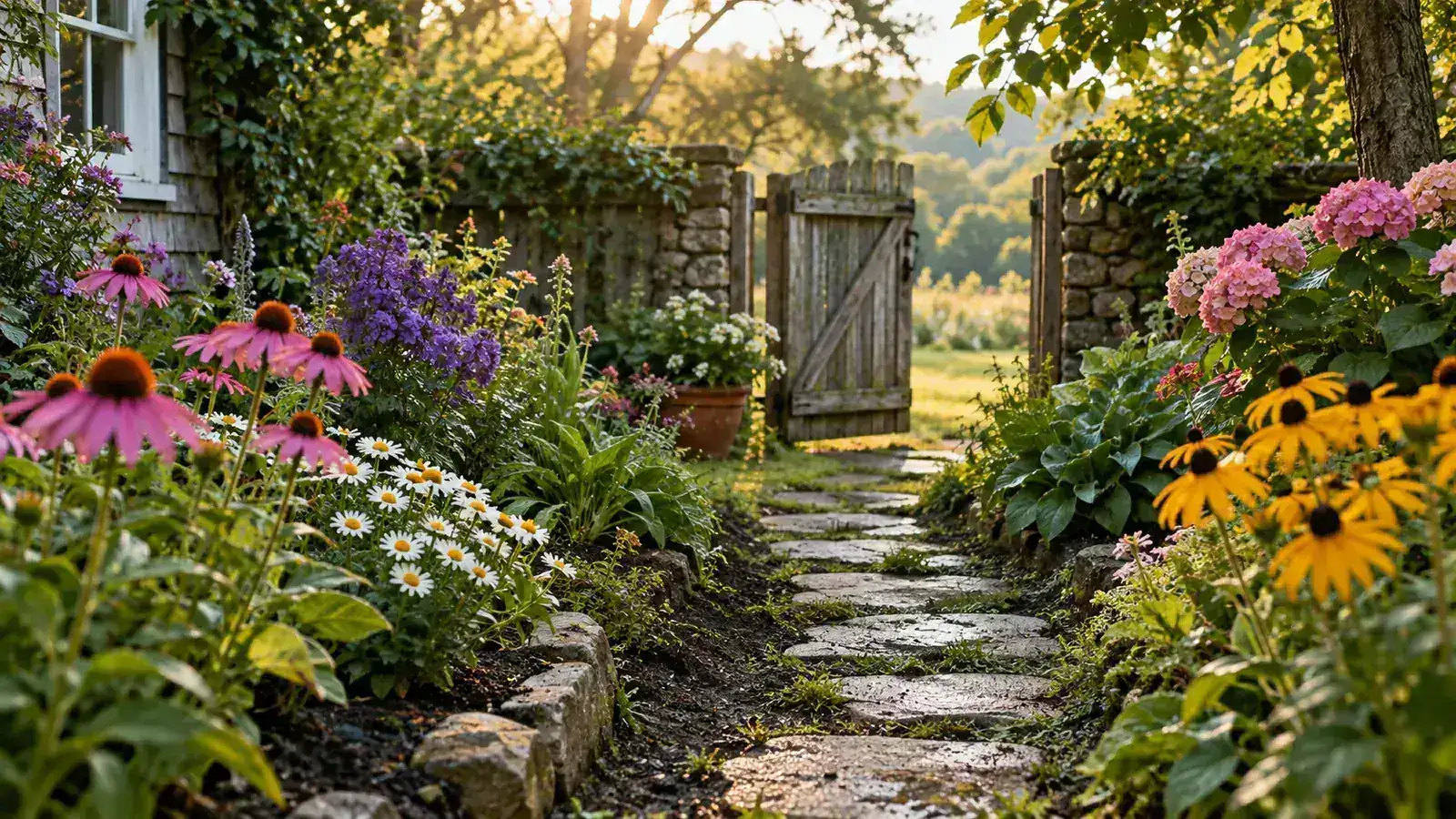
| A garden in bloom, well tended, with a stone path | Satisfaction with something that worked out, a calm phase, a wish to rest |
| A neglected garden, with tall weeds and dried-up plants | Guilt over something left aside, tiredness, a postponed task |
| Watering, planting or pruning in the garden | Care in progress, patience, a project that takes time |
| A secret garden, or one behind a hidden gate | A part of life the person keeps to themselves, discovery, a pleasant surprise |
| A childhood garden, or one at a relative's house | Longing, a search for safety, the memory of someone who took care of you |
If the scene had more trees than flowerbeds, it may be worth reading dreaming about a tree or dreaming about a forest.
See also: Dreaming about leaves and Dreaming about a desert.
When this dream calls for attention
Gardens rarely frighten anyone. If the scene keeps coming back as a nightmare, with a garden that rots, that sinks or that you cannot get out of, and you wake up distressed several times a week, reach out to a health professional: frequent nightmares have treatment. See how to have fewer nightmares.
Source: Morgenthaler and colleagues, Journal of Clinical Sleep Medicine, 2018.
The garden in dream books
In O Livro dos Sonhos, a Brazilian dream book, L. P. Baçan records the garden in the book's short style, with one line for life and another for love: in life, prosperity and peace; in love, happiness at home, with a neglected garden as a sign of sadness. It is the condensed version of a tradition that links the garden to well-being.
Freud saw in this kind of book a mechanical "decoding", in which each image receives a fixed meaning without looking at the person who dreamed. For him, the garden of a tired gardener and the garden of someone who has just moved into an apartment without a balcony do not mean the same thing.
Sources: Freud, Die Traumdeutung, 1900; L. P. Baçan, O Livro dos Sonhos, 2014.
Freud, Jung and faith on the garden
In Freud's psychoanalysis. In The Interpretation of Dreams, landscapes, flowers and enclosed places often appear as disguises for wishes tied to the body and to affection. The garden, walled and cultivated, would be one of those settings in which the dream speaks of what a person desires without saying it openly.
In Jung's psychology. For Jung, the garden is nature shaped by the human hand, an image of the effort to give form to inner life. Man and His Symbols reminds us that the meaning depends on the dreamer: the same garden can be a refuge for one person and a prison for another.
In symbols and faith. Chevalier and Gheerbrant note that the garden is an image of paradise in many cultures, and that the word "paradise" itself comes from Old Persian, with the sense of an enclosed garden. In the Bible, human history begins in a garden, Eden, in Genesis 2:8, and Isaiah 58:11 compares those who care for others to "a watered garden". In Candomblé, an Afro-Brazilian religion, leaves and plants belong to Ossaim, and Reginaldo Prandi records the saying that without leaves there is no orisha. For people of faith, the garden in a dream is usually read as a place of encounter and healing.
Bringing both readings together. Science explains how the balcony, the town square and childhood memories turn into a garden at night; tradition explains why this place carries the idea of paradise and of care. Noticing whether the garden was in bloom or neglected is what brings the two together.
Sources: Freud, Die Traumdeutung, 1900; Jung (ed.), Man and His Symbols; Chevalier and Gheerbrant, A Dictionary of Symbols; Prandi, Mitologia dos orixás.
What folk tradition associates with the garden
In Brazilian folk reading, a garden in bloom would mean prosperity and peace at home; a dry garden, worries about money or family. Planting in the garden is read as the start of something good; picking flowers, as recognition; seeing animals in the garden, as a visit or news. A garden full of colors would mean a busy social life, and an all-green garden, tranquility.
These are readings from tradition, good for thinking and poor for predicting. See what dream meanings look like according to science and culture.
Sources
- Schredl M, Hofmann F. Continuity between waking activities and dream activities. Consciousness and Cognition, 2003. https://doi.org/10.1016/S1053-8100(02)00072-7
- Dement W, Wolpert EA. The relation of eye movements, body motility, and external stimuli to dream content. Journal of Experimental Psychology, 1958. https://doi.org/10.1037/h0048908
- Morgenthaler TI et al. Position Paper for the Treatment of Nightmare Disorder in Adults: An American Academy of Sleep Medicine Position Paper. Journal of Clinical Sleep Medicine, 2018. https://doi.org/10.5664/jcsm.7178
- Freud S. The Interpretation of Dreams (Die Traumdeutung), 1900. Project Gutenberg. https://www.gutenberg.org/ebooks/66048
- Baçan LP. O Livro dos Sonhos (Brazilian dream book). Self-published, 2014.
- Jung CG (ed.). Man and His Symbols, 1964. Portuguese edition consulted: O homem e seus símbolos, Nova Fronteira/HarperCollins Brasil. https://www.skoob.com.br/book/8435
- Chevalier J, Gheerbrant A. A Dictionary of Symbols (Dictionnaire des symboles). Portuguese edition consulted: Dicionário de símbolos, José Olympio/Record. https://www.record.com.br/products/dicionario-de-simbolos
- Prandi R. Mitologia dos orixás (Mythology of the Orishas). São Paulo: Companhia das Letras, 2001. https://www.companhiadasletras.com.br/livro/9788535900644/mitologia-dos-orixas
Frequently asked questions
Does dreaming about a garden in bloom mean prosperity?
That is the folk reading. Dream research finds no prediction: a garden in bloom usually goes with satisfaction about something the person has cultivated.
Is dreaming about a neglected garden a bad omen?
No. It usually reflects guilt or tiredness about a task or relationship left aside. It is a feeling, not a warning.
What does it mean to dream about the garden at grandma's house?
Childhood places often come back in dreams, usually with a sense of safety and longing. There is no sign of any event.
Does the Bible talk about gardens?
Yes. Creation begins in the garden of Eden (Genesis 2:8), and Isaiah 58:11 uses the "watered garden" as an image of those who care for others. The Bible does not interpret dreams about gardens.
I took care of my plants and dreamed about a garden. Is that normal?
Yes. The day's activities, even small ones, often carry on into dreams.