Why switch at all
Many people keep the checking account they opened years ago out of habit, even when it charges a monthly maintenance fee unless you keep a minimum balance, charges overdraft fees or pays almost nothing on savings. Moving your direct deposit is the simplest way out: once your paycheck lands somewhere else, the rest follows.
Read also: How to stop paying overdraft fees and get out of the red and Emergency fund: how much to save and where to keep it.
How to switch, step by step
- Open the new account first. Look for no monthly fees, no or low overdraft fees and a good ATM network. Many online banks and credit unions qualify.
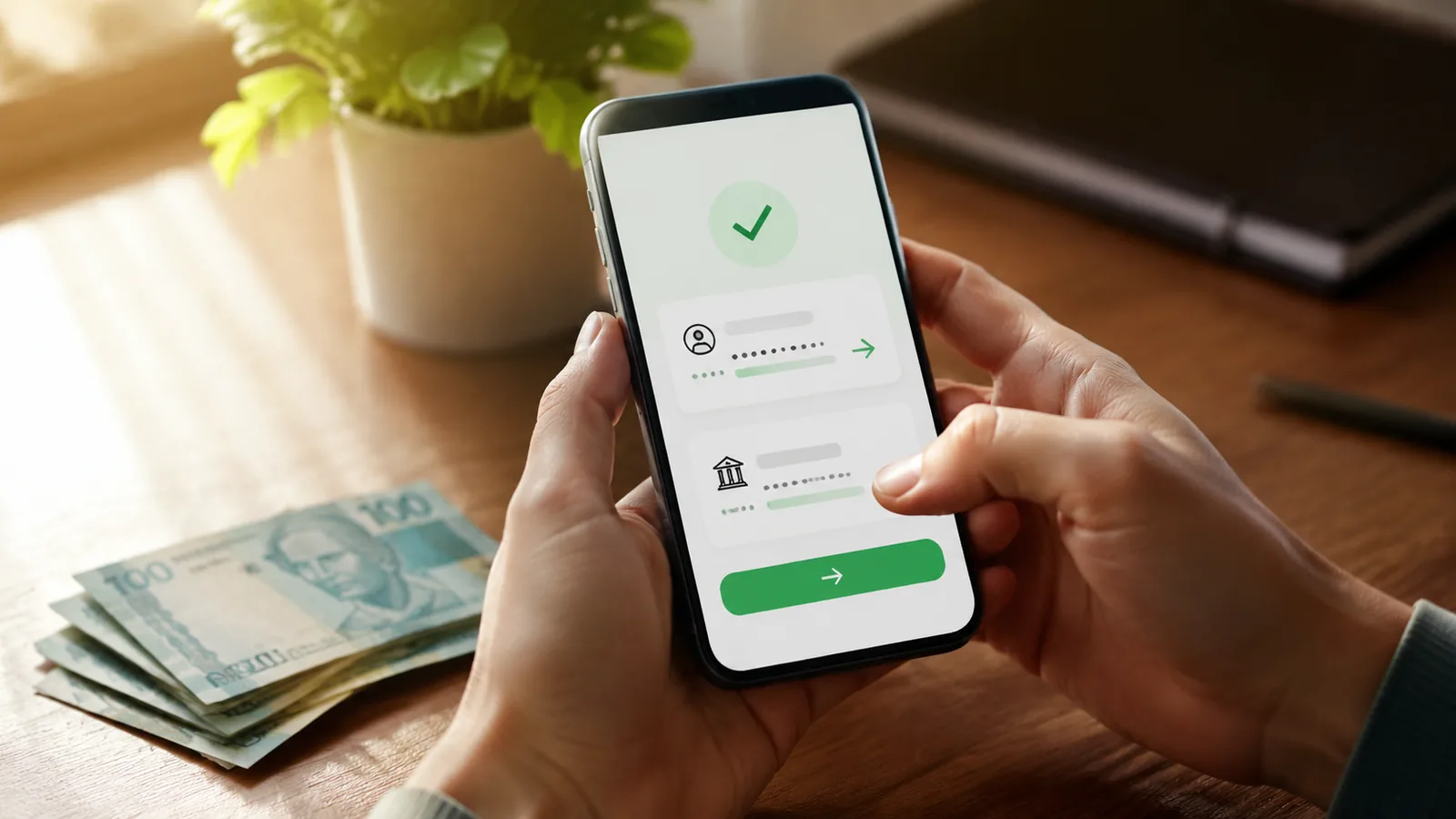
- Update your direct deposit. Most employers let you change it in the payroll or HR portal; others use a direct deposit form with the new routing and account numbers. Some banks can do it for you through the app.
- Consider a split. Many payroll systems let you send a fixed amount or percentage to savings automatically.
- Wait one or two pay cycles and confirm the paycheck arrived in the new account.
Before closing the old account
- Move every autopay and bill pay that pulls from the old account: rent, utilities, credit cards, subscriptions.
- Update other deposits, like tax refunds, benefits or payment apps linked to the old account.
- Leave a small cushion in the old account for a month to catch anything you forgot, then close it and ask for written confirmation.
An old automatic payment hitting a near-empty account is how many people end up with overdraft fees. See how to avoid them.
When it really pays off
The switch pays off if you are paying monthly fees, overdraft fees or ATM fees, or if your savings earn far less than a high-yield account. Even $12 a month in maintenance fees is $144 a year. Some banks also offer a cash bonus for setting up direct deposit, but read the conditions: minimum deposits, how long you must keep the account and any fees. Pair the move with an emergency fund in a separate savings account.
Source: Consumer Financial Protection Bureau, Bank accounts and services.
What regulators say
The Consumer Financial Protection Bureau says banks and credit unions may charge a monthly maintenance fee, which must be disclosed when you open the account, and that many waive it if you keep a minimum balance or have your paycheck deposited directly. If the fees are too high, the CFPB says you can move your money to an institution with lower or no maintenance fees.
Brazil goes further with a dedicated payroll account. Under a 2022 National Monetary Council rule (in Portuguese), banks cannot charge workers for keeping that account, for requesting salary portability or for moving the money to another bank. A 2026 Central Bank rule, effective July 1, 2027, will require each paycheck to be forwarded within two hours.
Sources: Consumer Financial Protection Bureau; Brazil, CMN Resolution 5,058 (in Portuguese); Brazil, BCB Resolution 566 (in Portuguese).
Sources
- Consumer Financial Protection Bureau. Bank accounts and services. https://www.consumerfinance.gov/consumer-tools/bank-accounts/
- Consumer Financial Protection Bureau. Why am I being charged a monthly maintenance fee for my bank or credit union account? CFPB. https://www.consumerfinance.gov/ask-cfpb/why-am-i-being-charged-a-monthly-maintenance-fee-for-my-bank-or-credit-union-account-en-2151/
- Conselho Monetário Nacional. Resolução CMN nº 5.058, de 15 de dezembro de 2022. Banco Central do Brasil, 2022. https://www.bcb.gov.br/estabilidadefinanceira/exibenormativo?tipo=Resolu%C3%A7%C3%A3o%20CMN&numero=5058
- Banco Central do Brasil. Resolução BCB nº 566, de 4 de maio de 2026. Banco Central do Brasil, 2026. https://www.bcb.gov.br/estabilidadefinanceira/exibenormativo?tipo=Resolu%C3%A7%C3%A3o%20BCB&numero=566
Frequently asked questions
Do I need my employer's permission to change banks?
No. You just update your direct deposit details, usually in the payroll portal or with a form.
How long does it take to switch direct deposit?
Often one or two pay cycles. Keep the old account open until you confirm the paycheck arrived in the new one.
Will switching banks hurt my credit score?
Opening a checking account usually does not affect your credit score, although some banks check your banking history.
Are bank bonuses for direct deposit worth it?
They can be, if you meet the conditions without paying fees. Read the minimum deposit and the time you must keep the account.