What this dream usually points to (and what it doesn't)
Dream interpretation is not prediction and not diagnosis. This article separates what sleep research observes from what popular interpretation associates with the theme.
Dreaming about wheat does not promise money, a new job or a big harvest in real life, and dry wheat does not announce a loss. The dream usually follows the way you see your own effort: the satisfaction of feeling that something has ripened, the anxiety of waiting for results, or the fear of losing what you have built.
Read also: Dreaming about crops or a garden and Dreaming about bread.
What dream studies show
Research on the continuity between waking life and dreams shows that what fills the mind during the day, from tasks to worries, tends to come back at night. Someone who works on a farm, bakes bread at home, drove past a field or saw a photo of crops has plenty of material for a dream like this.
The same line of research suggests that emotional weight matters as much as frequency. A work deadline, a renovation that never ends or an investment slow to pay off can take the shape, in a dream, of a field waiting for harvest time. The image comes from the countryside; the emotion usually comes from your present. See also why we dream.
Common variations of dreaming about wheat
| Scene | What it usually comes with |
|---|---|
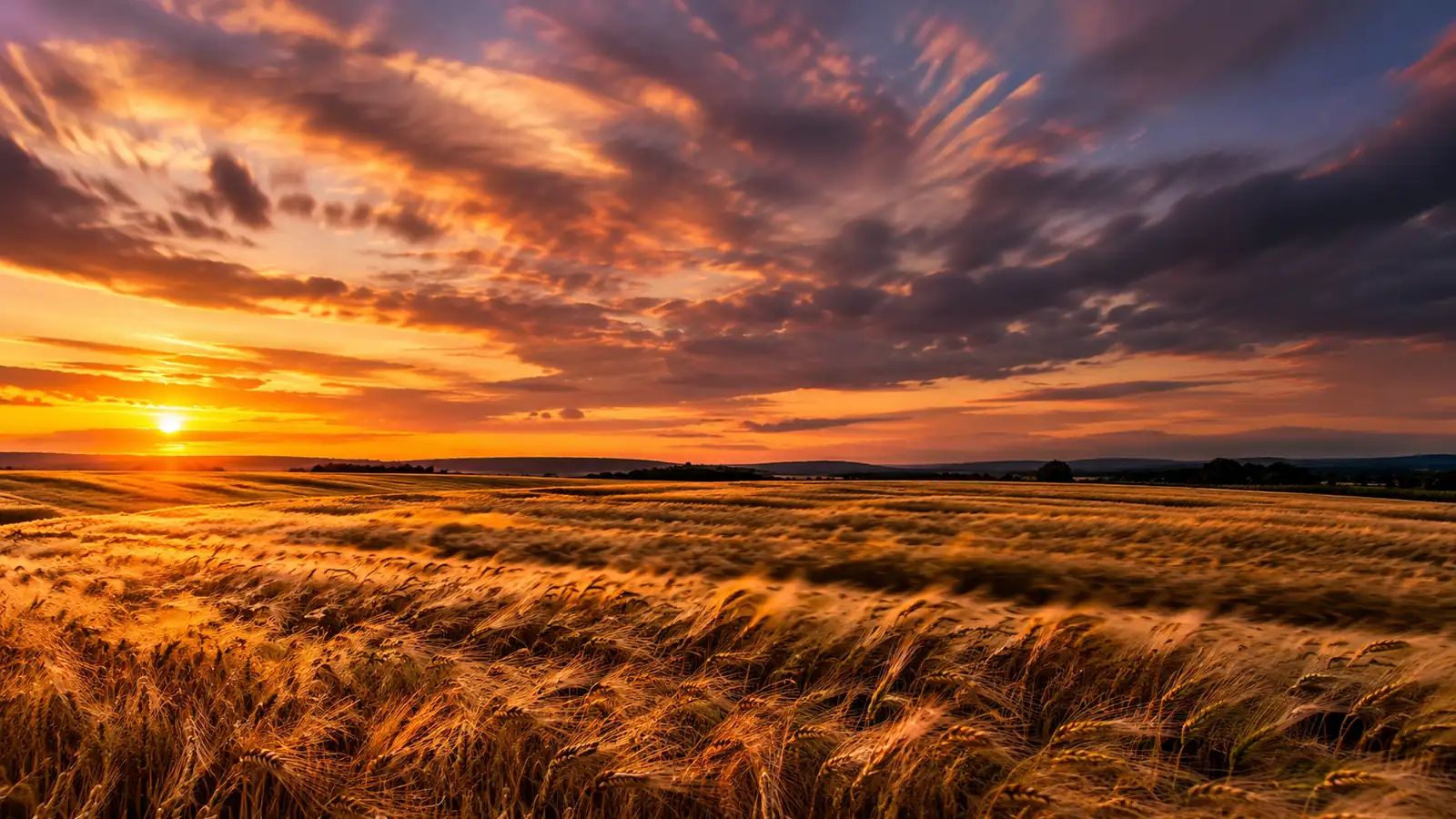
| A golden wheat field swaying in the wind | Calm, a sense of plenty and of something having ripened |
| Harvesting or reaping wheat | Satisfaction with an effort that is starting to pay off |
| Dry, burned or pest-ridden wheat | Fear of losing what you have built, worry about work or bills |
| Planting or scattering wheat seeds | Starting a project, patience with how long things take |
| Grain or flour spilled on the floor | A sense of waste, of something slipping through your fingers |
If the soil itself caught your eye, also read dreams about soil and earth.
If the dream keeps coming back: when to seek help
Wheat dreams are usually peaceful. If the ruined field keeps coming back, you wake up distressed several times a week or you start dreading bedtime, it is worth talking to a health professional: frequent nightmares can be treated. See how to have fewer nightmares.
Source: Morgenthaler et al., Journal of Clinical Sleep Medicine, 2018.
Freud, Jung and faith on this dream
In Freud's psychoanalysis. For Freud, dreams combine impressions from the previous day, even the most trivial ones: a bag of flour in the kitchen or the print on a bread bag can grow into an entire field. Through condensation, a single crop can bundle several concerns at once, such as pay, family and a stalled project. What looks like background may be the heart of the dream.
In Jung's psychology. Man and His Symbols quotes the medieval mystic Meister Eckhart: all grain means wheat, all natural treasure means gold. The book uses the idea when discussing the Self, the center that guides the psyche toward wholeness. Through a Jungian lens, a ripe field can be read as an image of something in you that has reached the right point, not only at work.
In the Dictionary of Symbols. In A Dictionary of Symbols, Chevalier and Gheerbrant recount that in the Eleusinian mysteries a grain of wheat was shown in silence to initiates, in honor of Demeter, goddess of fertility: it evoked the death of the grain and its rebirth as many grains. In ancient Egypt, the ear of wheat was an emblem of Osiris, a symbol of death and resurrection.
In faith traditions. The Bible is full of wheat. Joseph dreams that his brothers' sheaves bow down to his (Genesis 37:5-10). Jesus speaks of the grain of wheat that must die to bear much fruit (John 12:24) and tells the parable of the wheat and the weeds (Matthew 13:24-30). For people of faith, the dream may invite thought about what is being sown; for science, it speaks of the present, not the future.
Sources: Freud, Die Traumdeutung, 1900; Jung (ed.), Man and His Symbols; Chevalier and Gheerbrant, A Dictionary of Symbols.
Dreaming about wheat in dream books
The Brazilian dream book O Livro dos Sonhos, by L. P. Baçan, reads wheat as prosperity in life and gratitude in love. The harvest follows the same tone: plenty in life, peace of mind in love.
Freud described two popular ways to interpret dreams. Books like this one follow the decoding method, which translates each image by a fixed key; the other is the symbolic method, which swaps the whole dream for another meaning. The classic example is Joseph before Pharaoh, who had seen fat and thin cows and full and withered ears of grain, and heard the answer: years of plenty followed by years of famine (Genesis 41). Freud found both approaches insufficient, because they ignore what each detail means to the dreamer.
Sources: Freud, Die Traumdeutung, 1900; L. P. Baçan, O Livro dos Sonhos, 2014.
What folk tradition links to this dream
In popular readings, ripe wheat is one of the most classic symbols of plenty, rewarded work and a full table. Green wheat is often read as a call for patience; dry wheat, as a reminder to take better care of resources; the harvest, as the end of a cycle. These are cultural readings, good for reflection, not guarantees of what will happen. See dream meanings according to science and culture.
Sources
- Schredl M, Hofmann F. Continuity between waking activities and dream activities. Consciousness and Cognition, 2003. https://doi.org/10.1016/S1053-8100(02)00072-7
- Morgenthaler TI et al. Position Paper for the Treatment of Nightmare Disorder in Adults: An American Academy of Sleep Medicine Position Paper. Journal of Clinical Sleep Medicine, 2018. https://doi.org/10.5664/jcsm.7178
- Freud S. The Interpretation of Dreams (Die Traumdeutung), 1900. Project Gutenberg. https://www.gutenberg.org/ebooks/66048
- Jung CG (ed.). Man and His Symbols, 1964. Portuguese edition consulted: O homem e seus símbolos, Nova Fronteira/HarperCollins Brasil. https://www.skoob.com.br/book/8435
- Chevalier J, Gheerbrant A. A Dictionary of Symbols (Dictionnaire des symboles). Portuguese edition consulted: Dicionário de símbolos, José Olympio/Record. https://www.record.com.br/products/dicionario-de-simbolos
- Baçan LP. O Livro dos Sonhos (Brazilian dream book). Self-published, 2014.
Frequently asked questions
Is dreaming about wheat a sign of prosperity?
Folk tradition and Baçan's O Livro dos Sonhos link wheat to prosperity. That is a cultural reading, not a prediction. From a research point of view, the dream usually reflects how you see your own effort and the wait for results.
What does it mean to dream about dry or burned wheat?
The scene often comes with fear of losing something you built or worry about work and bills. It does not announce a loss. If the dream keeps returning with distress, notice what has been weighing on your days.
What does the Bible say about wheat?
Wheat appears in Joseph's dream of the sheaves (Genesis 37), in the ears of grain in Pharaoh's dream (Genesis 41), in the parable of the wheat and the weeds (Matthew 13) and in the grain that dies to bear fruit (John 12:24). These are faith readings, not predictions.
Why did I dream about a wheat field if I live in the city?
Movies, photos, packaging, trips and even a loaf from the bakery can feed a dream. The brain mixes stored images with the emotions of the moment, and the field may simply be the setting it chose for them.